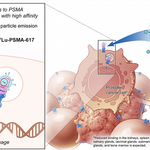
Beyond the standard “triplet therapy” and established hormone treatments, the research landscape for 2026 is rapidly expanding into precision medicine and “paradoxical” therapies.

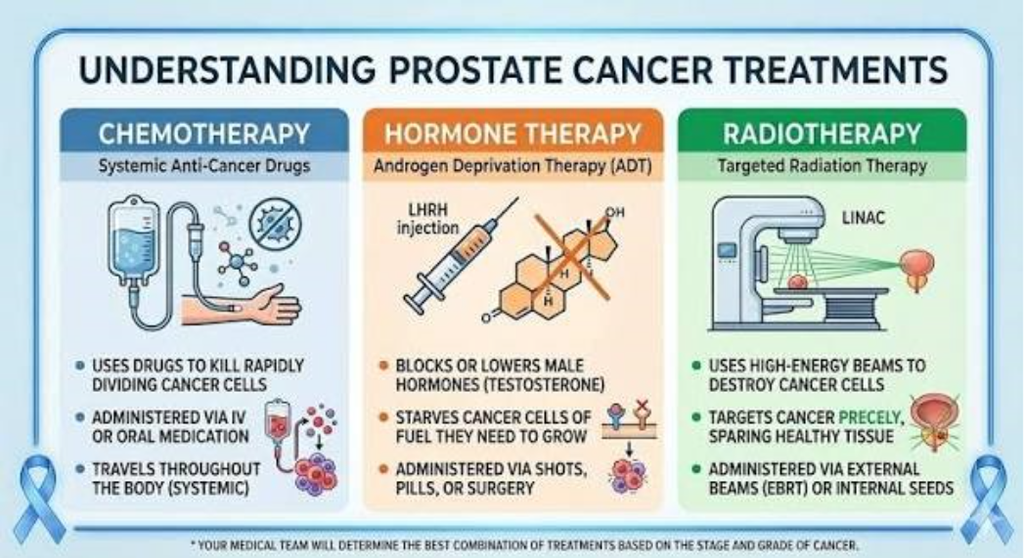
CHEMICALS IN PROSTATE CANCER
Chemical treatments for prostate cancer, often used for advanced or metastatic disease, include hormone therapy to lower testosterone, chemotherapy, targeted PARP inhibitors for specific genetic mutations, and radiopharmaceuticals. Standard chemotherapy includes docetaxel and cabazitaxel, while hormone therapies include abiraterone, enzalutamide, and apalutamide.
Hormone Therapy (Androgen Deprivation Therapy – ADT)
Prostate cancer cells rely on testosterone to grow. These treatments reduce testosterone levels or block it from reaching cancer cells.
- LHRH agonists: Leuprolide (Lupron Depot), Goserelin (Zoladex), Triptorelin.
- LHRH antagonists: Degarelix (Firmagon).
- Androgen Biosynthesis Inhibitors: Abiraterone acetate (Zytiga, Yonsa).
- Anti-androgens: Apalutamide (Erleada), Flutamide, Nilutamide (Nilandron), Bicalutamide (Casodex).
Chemotherapy
Used for advanced, hormone-resistant (castration-resistant) prostate cancer, as well as part of triplet therapy in metastatic hormone-sensitive prostate cancer (mHSPC).
- Docetaxel (Taxotere): Considered the standard of care.
- Cabazitaxel (Jevtana): Used when docetaxel is no longer effective.
- Mitoxantrone (Novantrone): Used to relieve symptoms.
- Platinum-based Agents: Cisplatin and Carboplatin, sometimes used in combination.
Targeted Therapy (PARP Inhibitors)
These treat cancers with specific genetic mutations, such as BRCA genes, that affect DNA repair.
- Olaparib (Lynparza)
- Rucaparib (Rubraca)
- Talazoparib (Talzenna)
- Niraparib (in combination with abiraterone)
Radiopharmaceuticals (Targeted Radiation)
These are radioactive drugs injected into the body to kill cancer cells.
- Radium-223 dichloride (Xofigo): Targets bone metastases.
- Lutetium Lu-177 vipivotide tetraxetan (Pluvicto): Targets PSMA-positive prostate cells.
Immunotherapy
- Sipuleucel-T (Provenge): A therapeutic vaccine that uses the patient’s own immune cells to combat advanced prostate cancer.
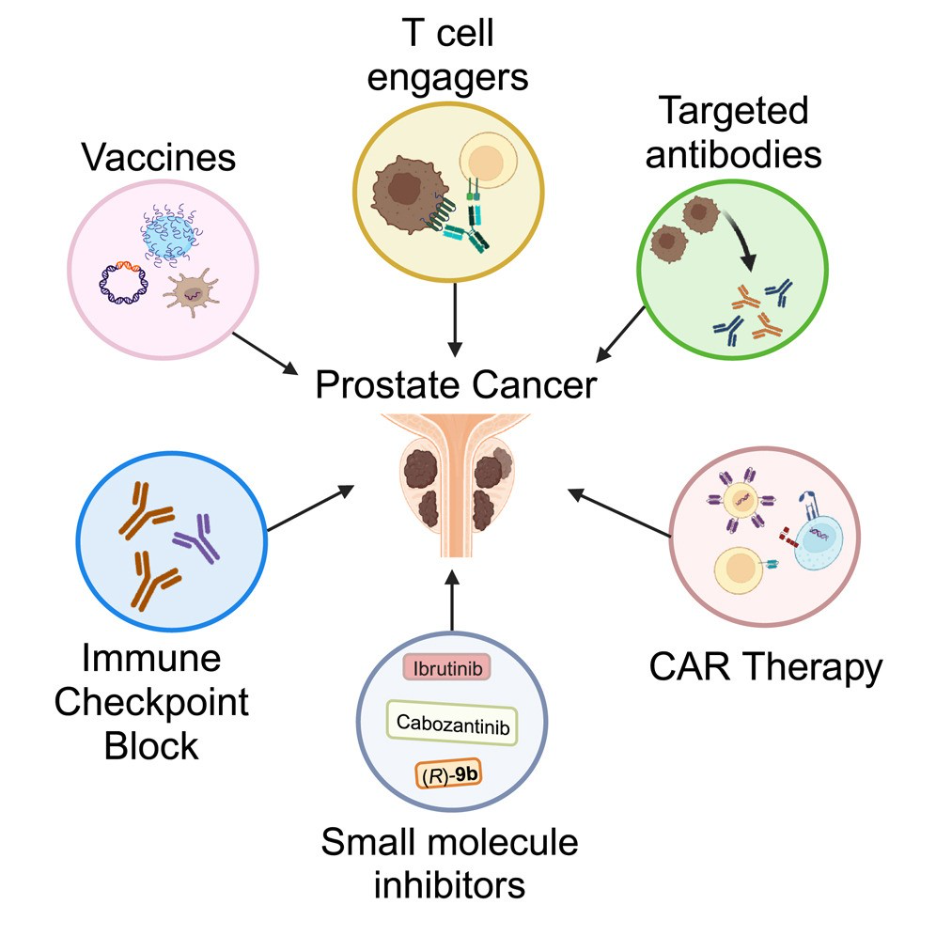
Research into new modalities for metastatic prostate cancer is currently focused on overcoming resistance to traditional treatments and harnessing the immune system more effectively.
1. Paradoxical Therapy: Bipolar Androgen Therapy (BAT)
One of the most intriguing areas of research is Bipolar Androgen Therapy.
- The Concept: Instead of continuously suppressing testosterone, BAT involves giving high-dose testosterone injections monthly while remaining on standard ADT. This creates a “bipolar” swing from castrate to supraphysiological levels.
- The Research: Studies suggest that rapidly spiking testosterone can “shatter” the DNA of cancer cells that have adapted to low-testosterone environments.
- Benefit: Trials show it can re-sensitize patients to hormone therapies (like Abiraterone or Enzalutamide) after they have stopped working, while also improving quality of life, libido, and muscle mass.
2. Targeted Radiopharmaceuticals (Beyond Lutetium)
While Lutetium-177 PSMA is now standard, new “next-generation” isotopes and targets are being tested:
- Radioligand Evolution: Lutetium Lu 177 vipivotide tetraxetan (Pluvicto) received an expanded FDA approval in 2026 for use in hormone-responsive (mHSPC), PSMA-positive metastatic cancer before the initiation of docetaxel chemotherapy, cementing the preference for early targeted radiation.
- Actinium-225 (Alpha-Therapy): Unlike Lutetium (Beta-emitter), Actinium-225 emits alpha particles, which are much more powerful but travel a shorter distance. Research shows it may be effective for patients who fail Lutetium-177 or have very small, resistant metastases.
- Lead-212 (Pb-212): Used as a Targeted Alpha Therapy (TAT), this is another alpha-emitter being tested in trials for its ability to deliver high-energy radiation directly to tumor cells with minimal damage to healthy surrounding tissue.
3. PARP Inhibitors
The paradigm for PARP inhibitors—such as olaparib, talazoparib, rucaparib, and niraparib—has fundamentally shifted from late-stage salvage therapies to early, biomarker-selected combinations.
- The Castration-Sensitive Setting (mHSPC): Landmark 2026 trial data (such as TALAPRO-3 and AMPLITUDE) have cemented the use of PARP inhibitor triplets (PARPi + Androgen Receptor Pathway Inhibitor [ARPI] + ADT) for patients with Homologous Recombination Repair (HRR) gene mutations. This approach dramatically reduces the risk of cancer progression in hormone-sensitive stages rather than waiting for castration resistance to develop.
- The Castration-Resistant Setting (mCRPC): For patients with HRR mutations progressing past initial hormone therapy, PARP combinations are highly preferred over delayed chemotherapy.
- The “BRCA2” Clean Winner: The therapeutic benefit remains exceptionally concentrated in patients carrying BRCA2 mutations. For unselected patients without HRR alterations, PARP inhibitors are not recommended.
4. Immunotherapy & Cell Engineering
Prostate cancer has historically been “cold” (resistant to immunotherapy), but new modalities are trying to “turn up the heat”:
- CAR-T Cell Therapy: Patient T-cells are engineered to recognize PSMA or PSCA (Prostate Stem Cell Antigen). 2025 and 2026 trials (like those involving the BPX-601 cells) are working to make these cells survive longer inside the “hostile” environment of a solid tumor.
- BiTEs (Bispecific T-cell Engagers): These are “bridging” molecules that physically grab a T-cell with one hand and a prostate cancer cell (via PSMA) with the other, forcing the immune system to attack.
- B7-H3 Targeted Therapy: This is a new protein target found on the surface of aggressive prostate cancer cells. Trials are testing antibodies and CAR-T cells specifically designed to hunt B7-H3.
5. Pathway Inhibitors (Precision Medicine)
- AKT Inhibitors (e.g., Ipatasertib): About 40-50% of metastatic patients have a PTEN loss, which activates the PI3K/AKT survival pathway. Recent research confirms that adding an AKT inhibitor to Abiraterone can significantly slow progression in these specific patients.
- CDK4/6 Inhibitors: Originally used in breast cancer, drugs like Abemaciclib are being trialed in prostate cancer to stop the cell cycle of tumor cells that have become resistant to hormone therapy.
- AKT Pathway Inhibition: In mid-2026, the FDA approved capivasertib combined with abiraterone for advanced, PTEN-deficient prostate cancer. Testing for PTEN deficiency has now become standard practice alongside HRR profiling.
6. Summary of New Modalities (Research Focus 2026)
| Modality | Target/Mechanism | Potential Role |
| BAT | Supraphysiologic Testosterone | Re-sensitizing to hormone therapy; Improving QoL |
| Alpha-Therapy | Actinium-225 / Lead-212 | Treating resistant / refractory metastatic disease |
| BiTEs | PSMA + T-Cell | Directing immune attack on “cold” tumors |
| AKT Inhibitors | PTEN-deficient tumors | Personalized therapy for genetic sub-groups |
| CAR-T | PSMA / PSCA / B7-H3 | Curative intent for advanced systemic disease |
For patients in Malaysia, participating in these “new modality” trials often requires referral to academic medical centers or specialist units led by a senior consultant urologist or oncologists who has experience in clinical trial recruitments.
Bone modifying agents in the treatment of metastatic prostate cancer, and is there a role for use of preventive bone modifying agents in locally advanced or localized prostate cancer
Bone management is a critical pillar of prostate cancer care, particularly because the skeleton is the most common site of metastasis and androgen deprivation therapy (ADT) itself weakens bone density.
1. Bone Modifying Agents (BMAs) in Metastatic Disease
In the metastatic setting, BMAs are used for two distinct reasons:
- Preventing Skeletal Related Events (SREs) (like fractures and spinal cord compression)
- Managing cancer-induced bone loss.
Primary Bone Modifying Agents include Denosumab and Zoledronic acid
- Denosumab (Xgeva): A RANK-ligand inhibitor administered as a subcutaneous injection.
- Zoledronic Acid (Zometa): A potent intravenous bisphosphonate.
2. Role of Preventive Bone Modifying Agents in Localized or Locally Advanced Disease
The use of Bone Modifying Agents in localized or locally advanced stages is not about “fighting the cancer” but about protecting the bone from the treatment.
3. Critical Management Considerations
Whether used for metastatic disease or prevention, Bone Modifying Agents require strict safety protocols:
- Osteonecrosis of the Jaw (ONJ): A rare but serious side effect. Patients should have a dental clearance before starting high-dose therapy and avoid invasive dental work during treatment.
- Hypocalcemia: Bone Modifying Agents can drive calcium levels down. Standard management includes daily Calcium (500mg) and Vitamin D (400–1000 IU) supplementation.
- Monitoring: For Zoledronic Acid, renal function must be checked before every infusion. Denosumab does not require renal monitoring but has a higher risk of rebound fractures if stopped abruptly.
The decision to start these agents usually follows a baseline DEXA scan to ensure that bone health is optimized throughout the duration of hormone therapy.
Current verdict in 2026
The 2026 consensus establishes a highly biomarker-driven, precision-medicine approach to treating advanced prostate cancer. Therapies are being utilized much earlier in the disease course, and treatments are frequently combined to maximize progression-free survival.
Comparative Summary Table
| Drug Class | Primary 2026 Clinical Setting | Biomarker / Patient Selection | Clinical Verdict |
| PARP Inhibitors | mHSPC & mCRPC | HRR mutations (specifically BRCA1/2) | Preferred early in combination with ARPIs; avoid if mutation-negative. |
| Targeted Agents (Capivasertib, Pluvicto) | mHSPC & mCRPC | PTEN deficiency or PSMA-positive scans | Highly effective precision tools shifted ahead of traditional chemotherapy lines. |
| Chemotherapy (Docetaxel) | High-volume mHSPC / Standard mCRPC | High tumor volume / Non-mutated disease | Restricted to selective triplet intensification or used after ARPI failure. |
| Bone-Modifying Agents | Throughout ADT and mCRPC stages | All patients on bone-depleting therapies | Mandatory backbone therapy to explicitly prevent fractures and skeletal failures. |