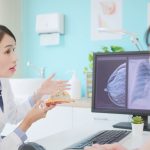
As a breast radiologist, I witness every day how powerful early detection can be in changing the course of a woman’s life. Many of our patients walk into our Breast Centre with anxiety written on their faces—some have found a lump, others are here because of a routine screening, and many are simply unsure of what the future holds. My responsibility is not only to interpret images or perform breast biopsies; it is also to give clarity, precise information and direction at a moment that often feels overwhelming.
At Hospital Picaso’s Breast Centre, I am fortunate to work alongside an extraordinary team of surgeons, oncologists, pathologists, and allied health professionals. We built this centre with one purpose in mind: to bring together all the expertise and services a woman might need under one roof. When imaging, pathology, surgery, and therapy work in sync, the journey becomes smoother and with less hassle for our patients. They no longer have to navigate between multiple facilities or repeat their history, and can instead focus entirely on their health and treatment.
Many patients are unaware of the importance of timely and accurate imaging in the whole breast cancer and diagnosis process. Here I would like to share what are the different imaging tools used at Hospital Picaso to detect cancer:
Our Advanced Imaging Tools:
Digital Breast Tomosynthesis (DBT)
Unlike traditional mammograms, which give a flat, two-dimensional picture, DBT takes layered images of the breast. This helps me “see through” dense tissue and detect cancers that might otherwise be hidden. With our Hologic and GE HealthCare systems, we are able to find more cancers earlier, while also reducing the stress of being called back for extra tests.
Breast Ultrasound
Ultrasound is often the next step if something unusual shows up on a mammogram, or if a woman has very dense breasts. It allows me to see whether a lump is solid or fluid-filled and guides me precisely if I need to do a biopsy. Our ultrasound systems also provide specialised imaging that looks at blood flow and stiffness, helping us better understand the nature of a lesion.
Breast MRI
For women at higher risk, or when mammogram and ultrasound results are not conclusive, breast MRI gives the most detailed view. With its high sensitivity, MRI can reveal areas of concern that may not appear on other scans, and it is especially helpful when we need to check both breasts or plan treatment in greater detail.
Minimally Invasive Biopsies
I perform ultrasound-guided core needle biopsies and vacuum-assisted excisions. These techniques allow me to sample or remove suspicious tissue with minimal discomfort.
Gentle and Precise Biopsy Techniques
Sometimes, imaging shows an area that needs further investigation. In these moments, accuracy and comfort matter most. At Hospital Picaso, I use minimally invasive techniques such as:
• Ultrasound-guided core biopsies
Where a tiny needle collects tissue samples while I monitor the process in real time.
• Vacuum-assisted biopsies and excisions
Which allows me to remove larger samples, or sometimes the entire small lesion, through a single tiny opening.
• Stereotactic or MRI-guided biopsies
For those rare cases where the abnormality is visible only on mammogram or MRI.
For our patients, having all these facilities in one place means they receive quicker answers. What matters most is speed with accuracy, because waiting is one of the hardest parts of this journey. With our in-house histopathology lab, I can usually shorten that wait, and I see the relief in my patients’ eyes when I give them answers sooner rather than later.
But diagnosis is only the beginning. The true strength of our centre lies in how we make decisions together. When a patient comes to see me, whether for a routine check or because she has noticed a lump or change in her breast, I guide her through a process designed to provide answers quickly and clearly:
1. Initial Visit & Imaging
Depending on her age and breast density, I may begin with a mammogram, an ultrasound, or both. These imaging studies allow me to detect even subtle changes in the breast tissue.
2. Radiology Review & Next Steps
Radiology Review & Next StepsIf I see an area that looks suspicious, I personally review the images and discuss with her whether a biopsy is necessary. Sometimes, I recommend additional imaging to obtain more detail before making a decision.
3. Biopsy & Pathology
When a biopsy is needed, I use minimally invasive techniques such as ultrasound-guided core needle biopsy or vacuum-assisted excision to collect a sample of tissue. Because our pathology lab is in-house, I am able to share results much sooner, which helps reduce the stress of waiting.
4. Multidisciplinary Planning
Once we have a diagnosis, I sit down with our breast cancer doctors and oncologists to review the results together. We carefully consider the tumour’s characteristics, stage, and, just as importantly, the patient’s preferences and quality-of-life goals before recommending a treatment plan.
5. Treatment & Ongoing Support
Whether treatment involves surgery, medication, or radiation therapy, I remain closely involved at every stage. I also provide imaging for surveillance as breast cancer care does not end when treatment finishes.
Beyond Treatment: Giving Back Time
I often remind my patients that breast cancer care is not a single moment but a continuum. It starts with screening, moves through diagnosis and treatment, and continues into survivorship. That is why we have counselling services, wound care support, and programmes for women who have completed treatment but still need guidance as they rebuild their lives. Recovery does not end when the last dose of chemotherapy is given or the surgical wound has healed. Recovery is learning how to live again, without fear overshadowing every day.
Every step of this process is designed with one thing in mind: giving back time. Time saved by detecting cancers earlier. Time saved by avoiding unnecessary repeats. Time saved by reducing waiting and uncertainty. And most importantly, time given back to women to live their lives without the weight of unanswered questions.
At Hospital Picaso, we believe no woman should walk this journey alone. That is why we bring the very best technology together with a compassionate team, so that from the very first image to the final step of recovery, you feel supported, informed, and cared for.
If you or someone you love is concerned about breast health, do not wait. Come see me and my team at the Breast Centre at Hospital Picaso. The sooner we begin, the more options we have, and the more time we can give back.