Understanding the evolution of prostate cancer treatment from the historic hormonal ablation to modern precision oncology is essential. It prevents repeating past mistakes, reveals how survival rates expanded, and highlights how we shifted from aggressive overtreatment to highly personalized, molecularly guided and patient-centered care.
The management of prostate cancer has undergone a remarkable evolution, transitioning from blind surgical and palliative approaches to an era of high-precision therapeutics. Understanding these distinct historical eras is not merely an academic exercise, but a clinical imperative.
It provides the necessary context to appreciate how we conquered the limitations of early therapies, moved away from universal interventions toward active surveillance, and incorporated advanced genomic profiling and targeted radioligands. Ultimately, this historical perspective empowers clinicians and patients to navigate modern, complex treatment paradigms while avoiding the historical pitfalls of overtreatment.
The Various Eras in Prostate Cancer Treatment
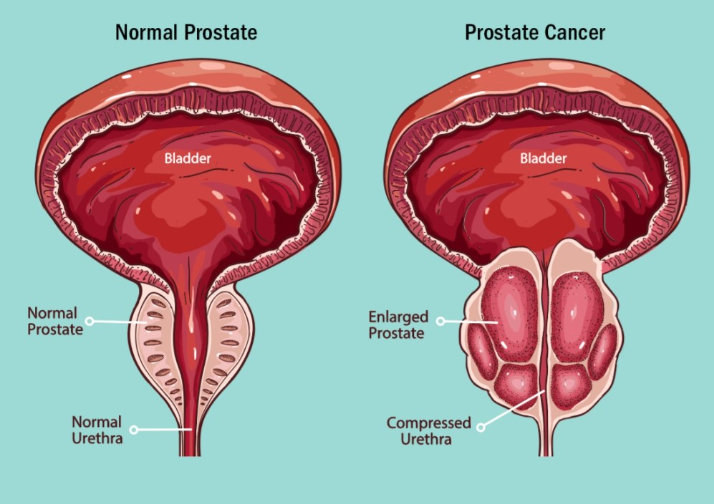
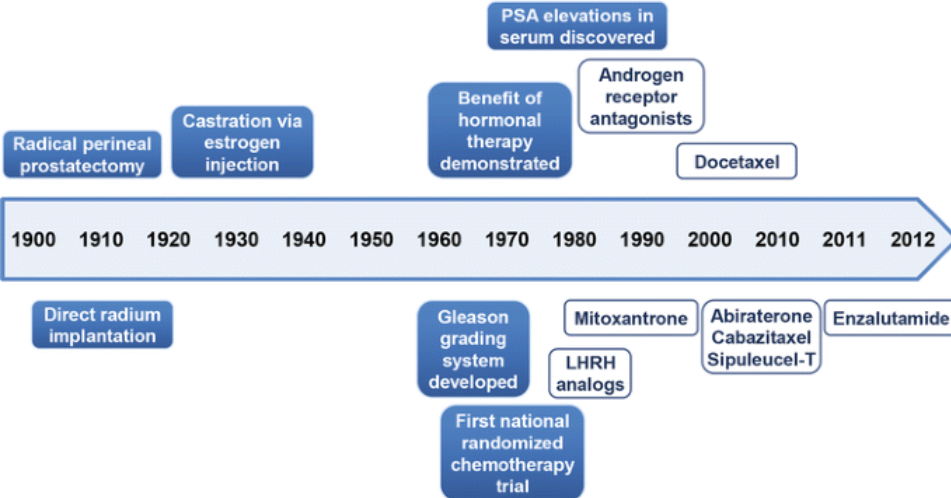
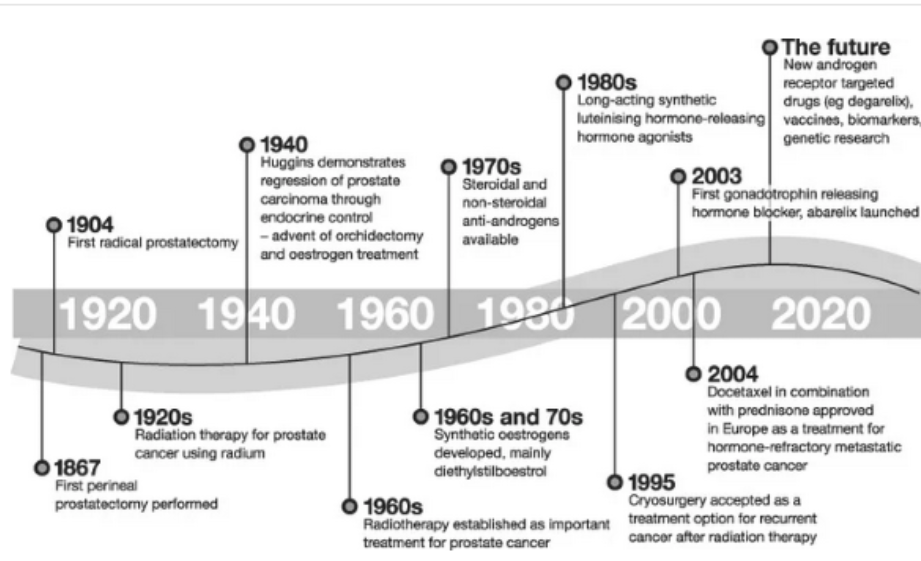
The treatment of prostate cancer has evolved from purely palliative care in the mid-20th century to highly targeted, multidisciplinary approaches today. This evolution is marked by several distinct eras, transitioning from hormonal manipulation and radical surgery to advanced radiotherapy, novel systemic therapies, radiopharmaceuticals, and now personalized precision medicine.
Prostate cancer treatment has evolved through distinct eras, each defined by a dominant scientific insight, a technological breakthrough, or a landmark clinical trial that reoriented the entire field. These eras did not unfold in isolation – advances in one modality often catalyzed progress in others – but each therapeutic domain has its own chronology, its own pioneers, and its own pivotal moments. Understanding these eras provides the clinician with an intellectual map of how modern prostate cancer care came to be.
1. The Era of Hormonal Dependence (1940s–1980s)
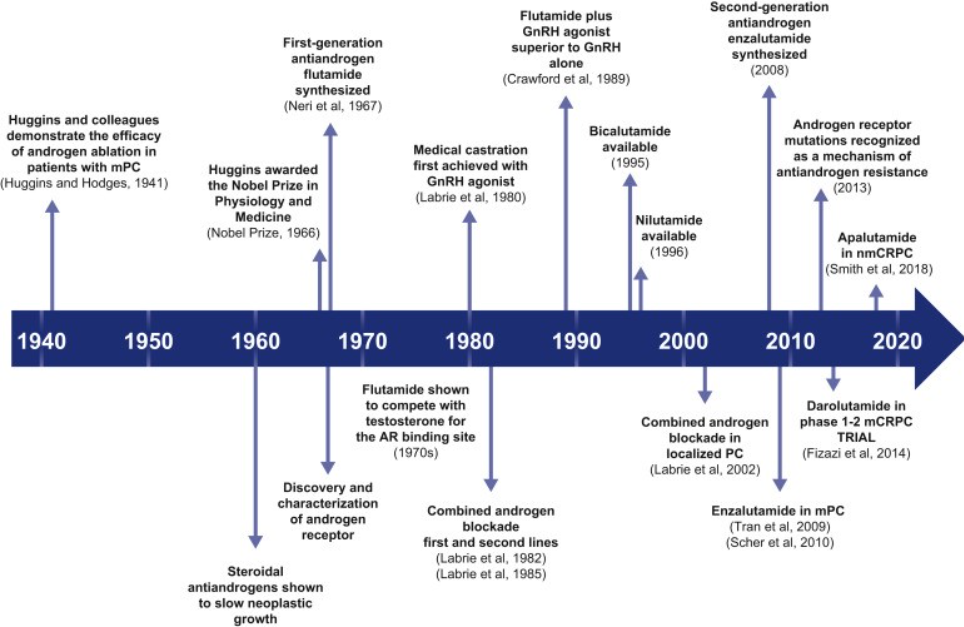
In1941, Dr. Charles Huggins and Clarence Hodges discovered that prostate cancer is androgen-dependent. They demonstrated that castration (surgical removal of testes) or estrogen injections (diethylstilbestrol, or DES) shrunk tumors and reduced acid phosphatase, a marker of advanced disease.
The Paradigm: This era established Androgen Deprivation Therapy (ADT) as the standard treatment for metastatic disease, moving away from palliative care.
Limitations: While effective initially, cancer eventually becomes castrate-resistant (continues to grow despite low testosterone).
2. The Era of Surgical Refinement & Radiotherapy (1950s–1990s)
Radical Prostatectomy (RP): While the first radical perineal prostatectomy was done in 1904, it was refined in the 1940s/50s. The major shift was in 1983 when Dr. Patrick Walsh described the nerve-sparing technique, which drastically reduced side effects (impotence and incontinence).
The Radiotherapy Evolution:
1960s -1980s: Megavoltage radiation and cobalt therapy allowed for deeper penetration and curative-intent treatment.
1980s – 1990s: Introduction of 3D Conformal Radiotherapy (3D-CRT) allowed doctors to sculpt radiation to the prostate shape, sparing surrounding tissue.
3. The PSA Era (1980s-1990s): The introduction of Prostate-Specific Antigen (PSA) as a diagnostic tool enabled early detection, allowing more patients to receive curative treatment.
4. The Era of “Combined” and Newer Hormonal Therapy (1990s–2010s)
LHRH Analogues (1980s-1990s): Leuprolide and goserelin replaced surgical castration as the standard for medical castration.
Maximum Androgen Blockade (MAB): Combining LHRH agonists with anti-androgens (like flutamide or bicalutamide) was introduced to block adrenal androgens, though its overall survival advantage was modest.
Newer Hormonal Agents (2010s): The 2010s brought Androgen Receptor Pathway Inhibitors (ARPIs), which work differently by blocking androgen synthesis or androgen receptors more strongly.
Abiraterone Acetate (2011/2013): Inhibits androgen production (CYP17A1 inhibitor).
Enzalutamide (2012): Directly blocks the androgen receptor.
Apalutamide / Darolutamide (Late 2010s): Further enhanced survival, moving into earlier treatment stages.
The development of second-generation androgen receptor pathway inhibitors represents a distinct era that bridges hormonal and targeted therapy.
Apalutamide and darolutamide were designed with reduced blood-brain barrier penetration to minimize the fatigue, falls, and cognitive effects associated with enzalutamide.
The SPARTAN and ARAMIS trials established these agents in non-metastatic castration-resistant prostate cancer, demonstrating dramatic delays in metastasis development.
The ARASENS trial, by showing that darolutamide adds survival benefit beyond ADT and docetaxel, inaugurated the triplet therapy concept in metastatic hormone-sensitive disease.
The newer hormonal therapy era is characterized by two principles: moving effective agents earlier in the disease course, and combining agents with non-overlapping toxicities to deepen androgen pathway suppression. By 2026, androgen receptor degraders using PROTAC technology are entering clinical investigation, suggesting that the next era may involve eliminating the receptor altogether rather than merely inhibiting it?
5. The Era of Radionuclear Medicine & Advanced Imaging (2010s–Present)
PSMA PET/CT: The 2010s saw the rise of Prostate-Specific Membrane Antigen (PSMA) imaging, which is significantly more accurate at finding metastatic disease than traditional CT/bone scans.
Radium-223 (2013): The first alpha-emitting radiopharmaceutical approved for bone metastases, increasing overall survival.
6. The Bone-Targeting Era
The recognition that bone metastases are the primary source of morbidity in advanced prostate cancer led to the development of radium-223, an alpha-emitting radiopharmaceutical that mimics calcium and selectively targets areas of increased bone turnover.
The ALSYMPCA trial demonstrated that radium-223 improved overall survival and delayed skeletal events in men with metastatic castration-resistant prostate cancer. NHS approval in 2016 added the agent to the therapeutic armamentarium, while an international clinical trial several years earlier found that combining radium-223 with hormone therapy could delay prostate cancer progression and improve quality of life.
7. The PSMA-Targeted Era
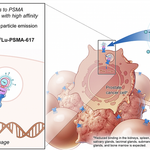
Radionuclear Medicine (Theranostics) – Lutetium-177-PSMA-617 (2021/2022): A targeted radioligand therapy that delivers radiation directly to PSMA-positive cancer cells throughout the body.
The discovery that prostate-specific membrane antigen (PSMA) is overexpressed on prostate cancer cells opened the door to theranostics—the pairing of PSMA-PET diagnostic imaging with therapeutic radioisotopes targeting the same molecular marker.
The VISION trial established lutetium-177-PSMA-617 as a standard therapy for PSMA-positive metastatic castration-resistant prostate cancer after progression on an androgen receptor pathway inhibitor and taxane chemotherapy, demonstrating improved overall survival.
The TheraP trial provided complementary evidence of higher response rates and fewer adverse events compared to cabazitaxel chemotherapy.
The PSMAfore trial extended the evidence to the post-ARPI, pre-chemotherapy setting.
The Alpha-Emitter and Combination Era (2025–Present)
The current frontier explores alpha-emitting isotopes, which deliver higher linear energy transfer over shorter path lengths, potentially improving tumor kill while reducing off-target effects.
The ANDROMEDA trial, launched in 2026, compares actinium-225-PSMA-617 plus SBRT against lutetium-177-PSMA-617 plus SBRT in oligometastatic recurrent disease.
The LUNAR trial demonstrated that combining neoadjuvant 177Lu-PNT2002 with metastasis-directed SBRT more than doubled progression-free survival in oligorecurrent hormone-sensitive prostate cancer, suggesting that radiopharmaceuticals can eliminate micrometastatic disease not visible on imaging.
Antibody-based PSMA-targeted approaches, such as TLX591-Tx in the ProstACT Global Phase 3 study, may offer different pharmacokinetic profiles with reduced salivary and renal exposure
8. The Triplet Therapy Era (2020–Present)
The most recent hormonal therapy era is defined by intensification: the upfront use of three agents rather than one or two.
The ARASENS trial demonstrated that adding darolutamide to ADT and docetaxel improves overall survival in metastatic hormone-sensitive prostate cancer.
The PEACE-1 trial showed similar benefit for abiraterone added to ADT and docetaxel.
The TITAN and ARCHES trials established apalutamide and enzalutamide as standards when added to ADT in the hormone-sensitive metastatic setting.
By 2026, triplet therapy is standard for chemotherapy-fit men with high-volume metastatic hormone-sensitive disease, while doublet ADT plus an androgen receptor pathway inhibitor remains appropriate for lower-volume disease.
9. The Current Era: Precision Medicine & Immunotherapy (2020s–Future)
Genomic/Molecular Testing: Treatments are now chosen based on the genetic makeup of the tumor.
PARP Inhibitors (e.g., Olaparib): Approved for patients with specific DNA damage repair mutations, such as BRCA1/2 or ATM, providing a “targeted” treatment approach.
Immunotherapy: Sipuleucel-T (Provenge) was approved in 2010, marking the first autologous cellular immunotherapy, while checkpoint inhibitors (e.g., Pembrolizumab) are used for specific molecular subsets.
AI and Robotics: The use of robotic-assisted radical prostatectomy (RAP) is now standard in many centers, and Artificial Intelligence (AI) is being integrated into imaging analysis.
The current era is defined by molecular characterization driving treatment selection. The recognition that 20-25% of men with advanced prostate cancer harbor DNA repair defects led to the PROfound trial, which established the PARP inhibitor olaparib for men with homologous recombination repair gene mutations .
The TALAPRO-2 trial subsequently demonstrated that talazoparib plus enzalutamide improved overall survival in unselected patients with metastatic castration-resistant prostate cancer—the longest median survival and largest survival improvement observed in a phase III mCRPC trial to date.
The NePtune trial is extending the precision paradigm to the neoadjuvant setting, testing olaparib plus ADT before radical prostatectomy in BRCA-altered high-risk localized disease.
The precision era integrates advanced imaging—PSMA-PET and multiparametric MRI—not merely for staging but for treatment selection and response assessment.
The BIOPSTAGE trial demonstrates that combined PSMA-PET and mpMRI can dramatically reduce unnecessary biopsies.
The DISSECTION 2.0 trial is testing whether PSMA-PET can identify men who can safely avoid pelvic lymph node dissection at prostatectomy.
AI-driven risk prediction, genomically-informed neoadjuvant therapy, and molecularly targeted radiopharmaceuticals collectively define an era in which treatment is increasingly tailored to the specific biology of each patient’s disease.
Synthesis: The Arc of Progress
Across all modalities, the history of prostate cancer treatment reveals a consistent trajectory: from anatomical insight to technological refinement, from one-size-fits-all to risk-adapted therapy, from palliation to cure, and from treating the tumor to understanding its molecular vulnerabilities.
The eras are distinct but connected—each builds on the achievements of its predecessors and sets the stage for the next. The challenge for the clinician in 2026 is to integrate the insights from each era into treatment decisions that honor both the evidence and the individual patient. The eras are not merely historical; they are the layers of understanding upon which contemporary practice rests.
This continuous evolution has made prostate cancer, even in its metastatic form, a chronic illness for many, with 5-year survival rates now exceeding 90% in many regions
How Landmark Clinical Trials Form the Basis of Decision-Making in Prostate Cancer Treatment
Unlike many other malignancies, decision-making in prostate cancer is driven by its high heterogeneity (meaning that prostate cancer is an exceptionally complex, diverse disease that requires considering many factors for treatment). Guiding treatment decisions requires a deep understanding of landmark clinical trials.
Prostate cancer management is predicated on its inherent heterogeneity, making the application of landmark clinical trials crucial for optimizing patient treatment. Therefore, understanding and utilizing key landmark trials is essential for providing effective, tailored treatment.
Clinical decision-making in prostate cancer treatment, just like any other diseases in modern medicine, does not arise from tradition, anecdote, or mechanistic reasoning alone. It is built, layer by layer, upon the foundation of landmark clinical trials. These trials provide the evidence that transforms hypotheses into standards of care, and understanding how they inform decision-making is as important as knowing their results.
Landmark clinical trials in prostate cancer directly inform clinical decision-making by redefining the standard of care, determining the optimal sequencing of therapies, and identifying molecular targets for precision medicine. These large-scale trials, often Phase III, compare new interventions against existing standards, with results leading to regulatory approvals (FDA) and updated clinical guidelines (NCCN, EAU, AUA Guidelines) that dictate how doctors manage the disease from localized to metastatic castration-resistant stages.
Here is how key landmark trials form the basis of prostate cancer treatment decisions:
1. Shifting Toward Earlier Intensification (Metastatic Disease)
Trials have demonstrated that adding new agents to conventional hormone therapy (Androgen Deprivation Therapy, or ADT) significantly improves survival, shifting care away from ADT alone.
- CHAARTED Trial: Established the benefit of adding docetaxel (chemotherapy) to ADT for high-volume metastatic hormone-sensitive prostate cancer (mHSPC).
- LATITUDE & STAMPEDE Trials: Proved that adding abiraterone acetate (hormonal therapy) to ADT improves survival in high-risk mHSPC patients.
- ARASENS Trial: Confirmed that the combination of darolutamide (second-generation anti-androgen) + ADT + docetaxel provides a significant survival advantage, establishing a new triple-therapy standard.
2. Defining Precision Medicine (Genomic Targeted Therapy)
Landmark trials have moved treatment from a “one-size-fits-all” model to molecularly guided strategies based on DNA damage repair mutations.
- PROfound Trial: Validated the use of PARP inhibitors (olaparib) for patients with metastatic castration-resistant prostate cancer (mCRPC) who have specific HRR gene mutations (e.g., BRCA1/2, ATM), turning genetic testing into a necessity for decision-making.
- BRCAAway Trial: Demonstrates that combining abiraterone and olaparib as first-line therapy can extend survival to over 5 years in HRR-deficient patients, far exceeding sequential treatments.
3. Advancing Radiopharmaceutical Care
- VISION Trial: A pivotal Phase 3 trial that showed 177Lu-PSMA-617 (Pluvicto) significantly improves survival and reduces radiographic progression in PSMA-positive mCRPC patients who have failed prior therapies. This trial established targeted radioligand therapy as a key late-line option.
4. Refining Localized Treatment
Trials have changed how early-stage and high-risk localized cancer is managed, balancing efficacy with quality of life.
- EORTC 22863: A landmark study establishing that combined radiotherapy and long-term ADT significantly improves overall survival (58% vs. 40% at 10 years) for high-risk localized prostate cancer.
- PACE-B Study: Demonstrated that Stereotactic Body Radiation Therapy (SBRT) is non-inferior to conventional fractionation, allowing treatment in only five sessions rather than 4-7 weeks.
5. Guiding Treatment Beyond Progression (Real-World Evidence)
Landmark trials also teach clinicians to continue effective therapies even after disease progression, often using PSA responses and imaging to guide changes, such as the PREVAIL trial, which utilized longitudinal PSA measurements to predict progression.
Summary of Impact:
Understanding the various eras of prostate cancer treatment – from the foundational days of surgical removal and hormone ablation to the modern era of precision medicine – is vital for recognizing how far care has progressed and shaping future treatment paradigms
Without these trials, innovations like targeted therapies or shortened radiotherapy schedules would not be validated for patient safety or efficacy. These studies move cutting-edge findings from the lab to clinical guidelines, ensuring patients receive the best possible care based on evidence
Tracing the evolution of prostate cancer management highlights several critical takeaways for both patients and clinicians:
Avoidance of Overtreatment: Early prostate-specific antigen (PSA) screening in the 1980s and 1990s saved lives, but it also resulted in significant overtreatment of slow-growing, indolent cancers.
Understanding the history of Active Surveillance helps modern patients avoid unnecessary radical procedures that negatively impact their quality of life.
Shift from Palliation to Precision: For decades, metastatic prostate cancer was treated with simple androgen deprivation therapy (ADT), which eventually failed. Recognizing how treatments evolved to include next-generation hormone therapies, targeted agents, and immunotherapy shows the industry’s shift from broad suppression to highly individualized, biomarker-driven care.
Minimization of Side Effects: Surgical techniques evolved from open retropubic prostatectomies to nerve-sparing robotic surgeries. Looking back at this progress emphasises how modern medicine continually strives to preserve urinary and sexual function.