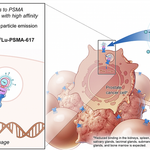
Prostate cancer is a clinically complex malignancy that can range from indolent, slow-growing localised tumours to aggressive, metastatic disease. Because these presentations are highly heterogeneous, a comprehensive understanding of the disease’s molecular underpinnings and landmark clinical studies is critical to guiding patient management, tailoring personalised therapies, and optimising outcomes across its various stages.
The judgment call from analysing these clinical trials – weighing the strength of evidence against the urgency of the clinical scenario – is where the art of medicine meets the science of clinical trials.
Historical Landmark Clinical Trials That Currently Form The Basis Of Prostate Cancer Management.
Prostate cancer management has been shaped over decades by landmark clinical trials that progressively redefined standards of care. These trials form an evidence pyramid, each building on previous knowledge to answer increasingly refined clinical questions. This article traces the historical trials that form the foundation of current treatment decision-making across the disease spectrum.
Surgical Trials: RADICALS and Beyond
Surgery has also been refined through randomised evidence. The RADICALS trials addressed the question of post-prostatectomy radiotherapy timing and hormonal therapy combination.
RADICALS-RT, led by Professor Chris Parker, showed that men could safely avoid routine radiotherapy after surgery, sparing them from adverse effects.
The 2024 follow-up from RADICALS-HD demonstrated that radiotherapy alone is effective for low-risk disease post-surgery, while two years of hormone therapy benefits higher-risk patients.
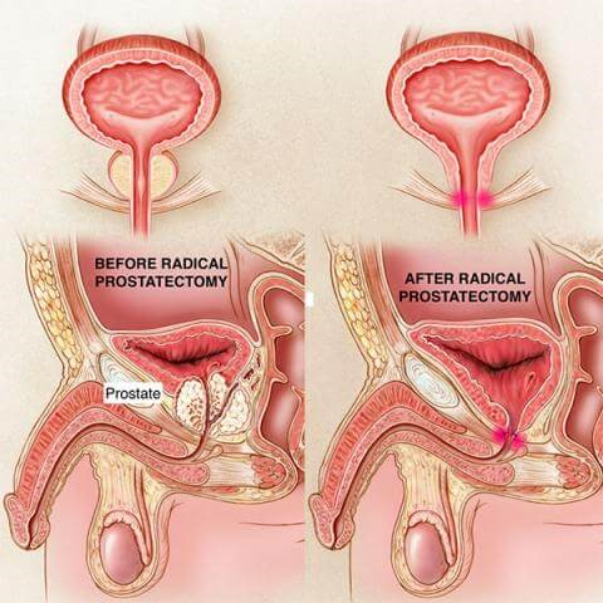
Radical prostatectomy – removal of the prostate
The Era of Treatment De-escalation in Localised Disease
ProtecT: Justifying Active Surveillance
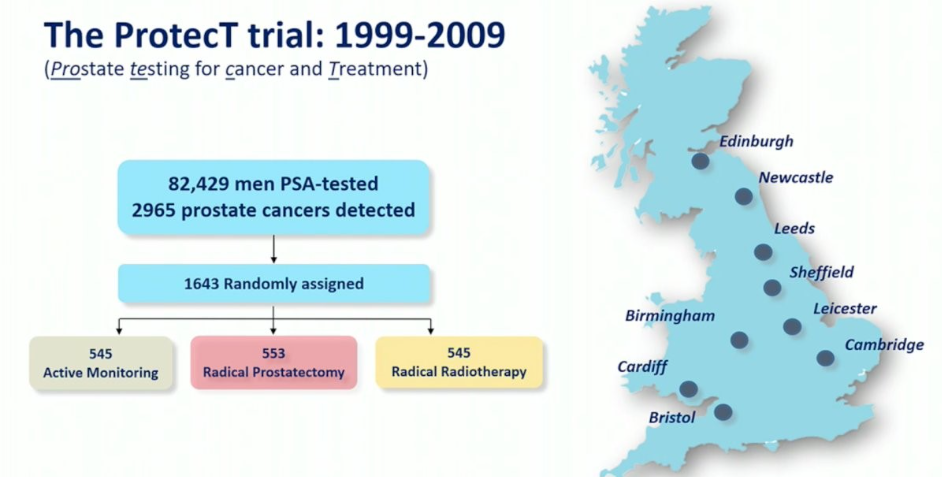
Perhaps no trial has had a more profound philosophical impact on prostate cancer management than the ProtecT trial. This randomised phase 3 study, which began recruiting in 1999, randomly assigned 1,643 men with clinically localised prostate cancer detected through PSA screening to active monitoring, radical prostatectomy, or radiotherapy. The trial’s design was rigorous: men aged 50-69 registered at 337 primary care centres across nine UK cities were invited for PSA testing, with biopsies offered to those with PSA ≥3.0 μg/L.
The 15-year outcomes, published in 2023, demonstrated remarkably low prostate cancer-specific mortality across all three arms: 3.1% in active monitoring, 2.2% in the prostatectomy group, and 2.9% in the radiotherapy group. The differences were not statistically significant. This finding legitimised active surveillance as a primary management strategy for low-risk disease and fundamentally altered the treatment conversation. Men could now be offered monitoring without accepting a demonstrable survival disadvantage.
The trial’s maturity and methodical conduct have made it a platform for further discovery. In 2026, the GPS-ProtecT study launched to validate the Genomic Prostate Score within the ProtecT cohort, seeking to refine risk prediction through molecular characterization. This illustrates how landmark trials become enduring research infrastructure.
Intensification in Advanced Hormone-Sensitive Disease
STAMPEDE: A Platform for Progress
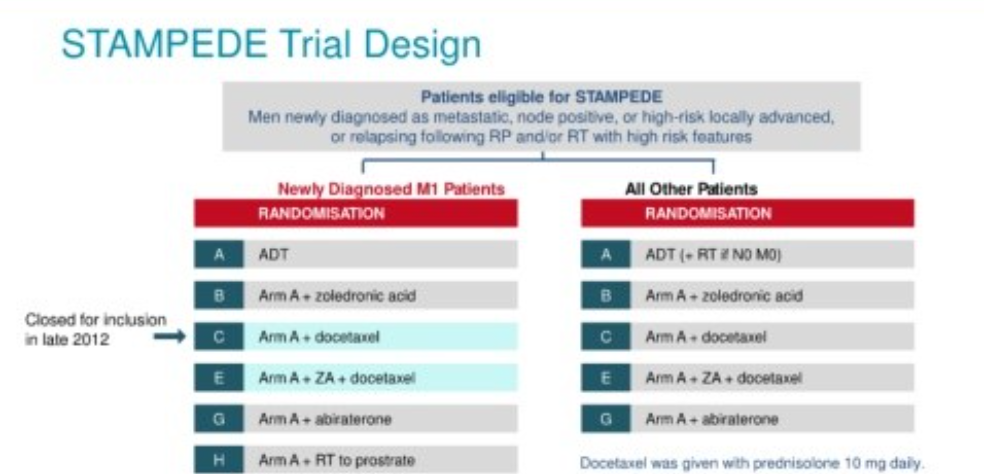
If ProtecT changed thinking about localised disease, the STAMPEDE trial transformed management of advanced prostate cancer. STAMPEDE opened recruitment in 2005 and enrolled nearly 12,000 men starting long-term hormone therapy, making it one of the largest prostate cancer trials ever conducted.
STAMPEDE’s genius lay in its multi-arm, multi-stage platform design, which allowed multiple treatments to be tested simultaneously against a single control arm. Inefficacious treatments could be dropped, and new comparisons added over time. This efficiency meant STAMPEDE made progress that would have taken decades through traditional trial designs.
The trial’s results cascaded into practice in waves. In 2015, STAMPEDE demonstrated that adding docetaxel chemotherapy to standard hormone therapy extended survival for men with metastatic disease. This led the NHS to approve docetaxel combination therapy, which became a standard of care. In 2017, STAMPEDE showed that abiraterone – a drug discovered at the Institute of Cancer Research – extended life in metastatic hormone-sensitive prostate cancer. In 2022, long-term findings from the radiotherapy arm confirmed that delivering radiotherapy to the prostate alongside standard hormone therapy could extend survival by an average of two years in men with limited metastatic disease. NHS England subsequently recommended radiotherapy for this patient group.
STAMPEDE also demonstrated that effective clinical trials can drive health policy decisions. When the trial provided evidence that abiraterone reduced the risk of death or cancer spread in non-metastatic high-risk disease, NHS Scotland approved the drug for this indication.
CHAARTED and LATITUDE: Defining Risk Categories
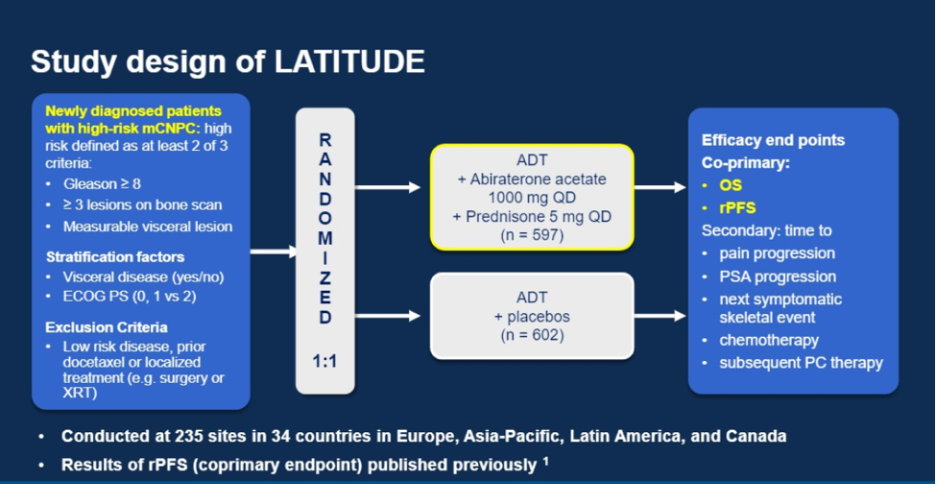
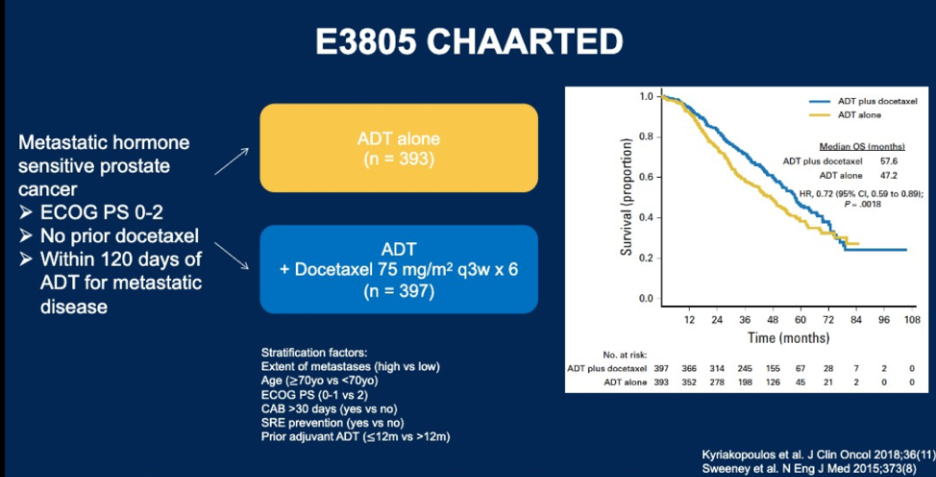
Alongside STAMPEDE, CHAARTED and LATITUDE established the risk-stratification framework now used globally. CHAARTED defined “high-volume” disease as four or more bone metastases with at least one outside the axial skeleton, or visceral metastases. LATITUDE defined “high-risk” as meeting at least two of three criteria: Gleason score ≥8, three or more bone lesions, or visceral metastases.
These definitions matter because they determine who benefits most from treatment intensification. The evidence is strongest for docetaxel or abiraterone in men with high-volume or high-risk metastatic hormone-sensitive prostate cancer who are fit for combination therapy. Both approaches improve overall survival compared to androgen deprivation therapy alone. A post-hoc analysis from STAMPEDE’s abiraterone comparison suggested consistent overall survival benefit independent of risk stratification, potentially extending the indication to low-risk patients.
The choice between docetaxel (six cycles) and abiraterone (until progression) relies on patient preference, cost, and side-effect profile assessment.
The Abiraterone Story: From Discovery to Standard of Care
The development of abiraterone exemplifies how a scientific discovery traverses the clinical trials pathway to become standard therapy. In the 1990s, scientists at the Institute of Cancer Research sought ways to turn off the production of male sex hormones driving prostate cancer, leading to the discovery of abiraterone acetate.
In 2008, a phase I trial led by Professor Johann de Bono revealed that abiraterone could treat up to 80% of patients with aggressive and drug-resistant prostate cancer. Phase III data in 2012 showed abiraterone doubled the time before radiographic tumour progression in men who had not received chemotherapy. The benefits were so striking that the trial was stopped early so all participants could receive the drug.
Regulatory and reimbursement milestones followed: FDA approval in 2012 for use before chemotherapy, NICE recommendation for NHS patients whose cancer had stopped responding to standard hormone therapy and docetaxel chemotherapy, and progressive expansion into increasingly earlier disease settings. Each step was underpinned by trial data.
Radiotherapy Refinement: IMRT, Hypofractionation, and the MR Linac
Radiation therapy for prostate cancer has been transformed by trials demonstrating that technical precision yields clinical benefit. In 2000, the Institute of Cancer Research and Royal Marsden became the first internationally to treat prostate cancer patients with intensity-modulated radiotherapy (IMRT). Long-term follow-up published in 2017 confirmed IMRT as safe, with strong survival rates and low toxicity, transforming treatment for many men with previously incurable prostate cancer.
The RT01 phase III trial demonstrated that higher-dose radiotherapy better controls localised prostate cancer and reduces the need for hormone therapy. NICE updated its guidance based on these findings.
The CHHiP trial addressed a practical question with enormous resource implications: could fewer, higher radiation doses achieve equivalent outcomes? Results published in 2016, after 14 years of follow-up, showed that delivering 20 fractions instead of the standard 37 did not affect survival or quality of life, potentially saving the NHS tens of millions of pounds annually.
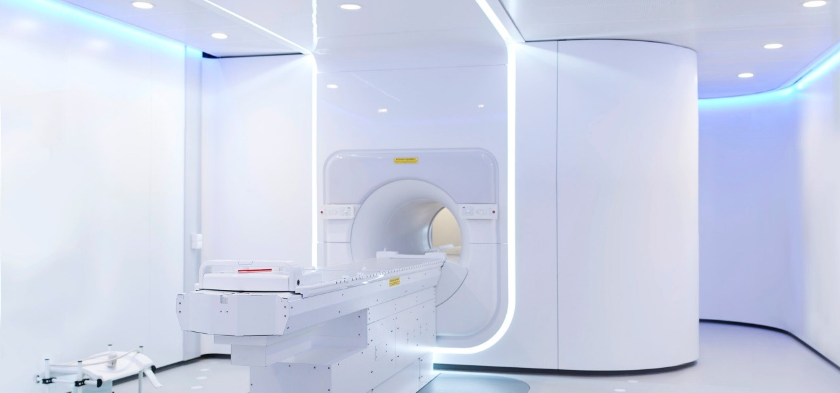
The 2018 introduction of the Magnetic Resonance Linear Accelerator (MR Linac) by the ICR and Royal Marsden represented the technological frontier: simultaneous MRI imaging and X-ray delivery, allowing real-time radiotherapy adjustment. The RADICALS-RT and RADICALS-HD trials further refined post-prostatectomy radiotherapy by demonstrating that men could safely avoid routine radiotherapy after surgery in select cases, and that radiotherapy alone suffices for low-risk disease while two years of hormone therapy benefits higher-risk patients.
MR Linac
The Radiopharmaceutical Revolution: VISION and TheraP
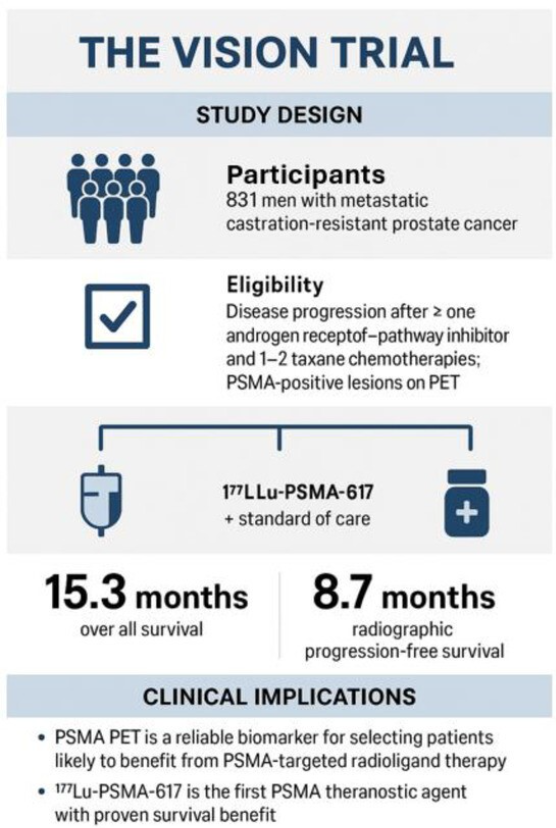
The introduction of PSMA-targeted radiopharmaceutical therapy represents one of the most significant advances in advanced prostate cancer treatment. The VISION trial, a phase III study co-led by Professor de Bono, evaluated lutetium-177-PSMA-617 in men with metastatic castration-resistant prostate cancer whose disease had progressed after androgen receptor pathway inhibitors and taxane chemotherapy.
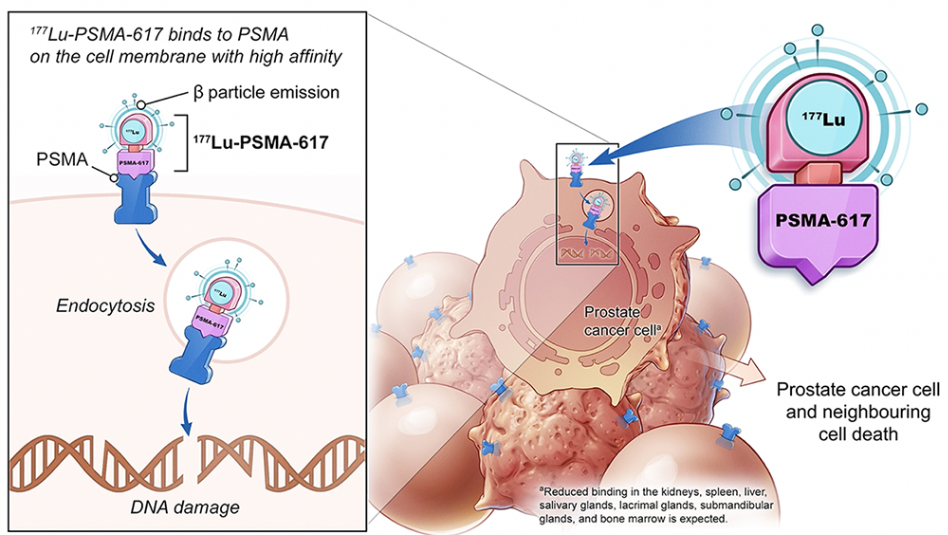
VISION demonstrated significantly longer median radiographic progression-free survival (8.7 months vs 3.4 months) and median overall survival (15.3 months vs 11.3 months) compared with standard of care alone. The MHRA approved 177Lu-PSMA-617 in 2022, and the treatment became a standard option for PSMA-positive patients post-ARPI and post-docetaxel.
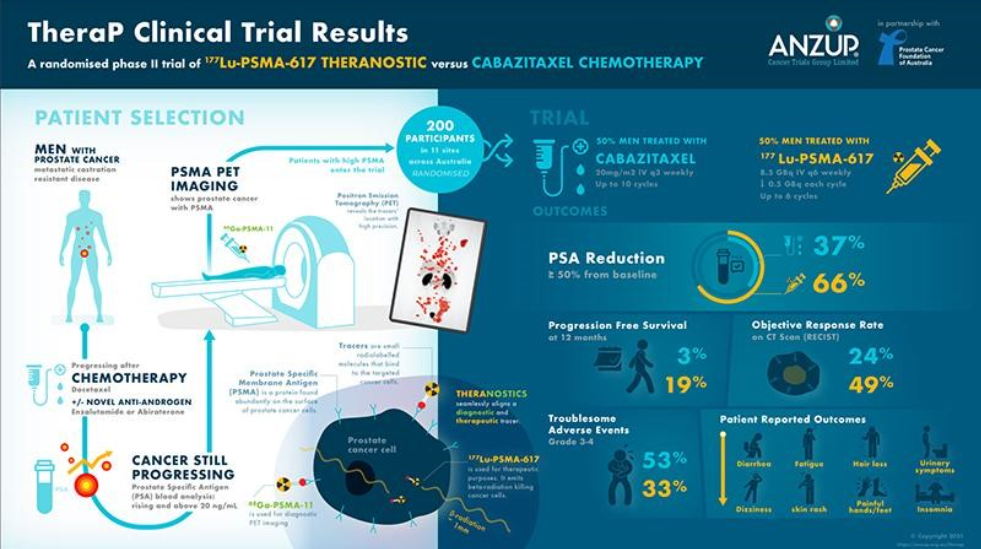
The TheraP trial provided complementary evidence. This randomised phase II study compared 177Lu-PSMA-617 against cabazitaxel chemotherapy, demonstrating similar survival with higher response rates and lower adverse events. Patients experienced improved quality of life, and striking PSA declines were observed—more than 80% reduction in 55% of patients. PSA decline at 12 weeks correlated with survival, with greater than 90% reduction associated with a hazard ratio of 0.34.
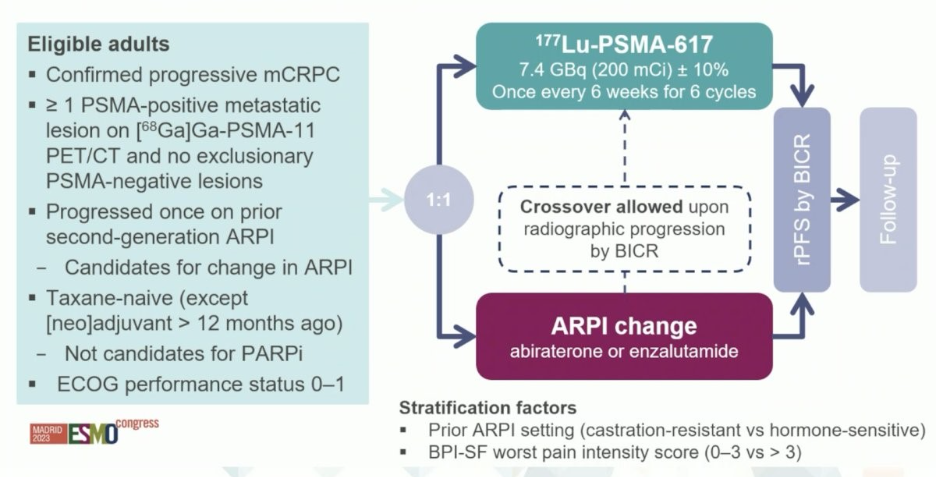
The PSMAfore trial subsequently evaluated 177Lu-PSMA-617 earlier in the treatment sequence, after one ARPI and before taxane chemotherapy. Preliminary results showed longer median radiographic PFS (12.0 months vs 5.6 months with alternative ARPI) . This evidence has shifted PSMA-targeted therapy from a post-chemotherapy option to a post-ARPI indication, with trials now investigating even earlier integration.
Radium-223, a bone-seeking radiopharmaceutical, gained NHS approval in 2016 after ICR-led trials demonstrated extended survival and improved quality of life for men with advanced prostate cancer and bone metastases.
The PARP Inhibitor Era: PROfound and TALAPRO-2
The recognition that approximately 20-25% of men with advanced prostate cancer harbor defects in DNA repair genes opened a new therapeutic avenue. The PROfound trial, co-led by the ICR, demonstrated that the PARP inhibitor olaparib benefited men with homologous recombination repair gene mutations. The FDA approved olaparib in 2020—the first time a targeted drug was approved for prostate cancers with DNA repair gene defects beyond BRCA mutations. NICE subsequently recommended olaparib for NHS patients with early-stage prostate cancer caused by faulty BRCA genes in 2023.
The TALAPRO-2 trial took precision medicine a step further by asking whether combining a PARP inhibitor with an androgen receptor pathway inhibitor could be effective regardless of genomic status. Final overall survival data presented at the 2025 ASCO Genitourinary Cancers Symposium showed that talazoparib plus enzalutamide reduced the risk of death by 20.4% in unselected patients with metastatic castration-resistant prostate cancer.
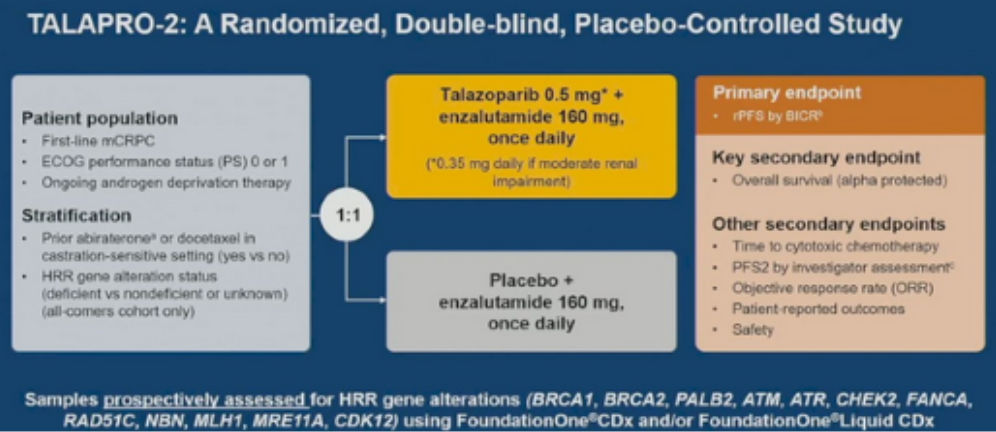
In the unselected cohort, median overall survival was 45.8 months with the combination versus 37.0 months with enzalutamide alone—an 8.8-month absolute improvement. For patients with confirmed HRR deficiency, the benefit was even more pronounced: median overall survival of 45.1 months versus 31.1 months, representing a 38% reduction in death risk.
These results are historic. TALAPRO-2 represents the longest median overall survival and largest improvement in median overall survival observed among randomised, controlled phase III trials in metastatic castration-resistant prostate cancer conducted to date. The combination maintained quality of life without compounding toxicity, with grade 3-4 anaemia being the most common adverse event, managed through dose reduction. As Tanya Dorff, MD, noted, the synergy between drug classes did not produce synergistic toxicity.
The Meta-Analytic Perspective
Decision-making in 2026 is not based on any single trial but on the synthesis of evidence across multiple landmark studies. The CHAARTED and LATITUDE risk classification systems now inform treatment selection globally. The STAMPEDE platform demonstrated that both docetaxel and abiraterone improve outcomes when added to androgen deprivation therapy, while its radiotherapy arm proved local treatment to the prostate benefits men with low-volume metastatic disease.
The EAU Guidelines and NICE recommendations translate this synthesised evidence into actionable treatment algorithms. These bodies weigh the totality of evidence, recognising that no single trial answers all questions definitively.
Conclusion
The historical landmark trials in prostate cancer share common features. They were large, multicenter, randomised studies designed to answer clinically relevant questions. They used endpoints that matter to patients – overall survival, quality of life, and avoidance of treatment-related harm. They built on mechanistic understanding of the disease, from the androgen dependence exploited by abiraterone to the DNA repair defects targeted by PARP inhibitors and the PSMA expression harnessed for radiopharmaceutical delivery.
Most importantly, they established a culture of evidence. The historical trials described here form the substrate upon which each new generation of trials builds – testing new combinations, earlier lines of therapy, and novel mechanisms. Understanding these trials is understanding the intellectual and clinical foundation of modern prostate cancer care.