The management of metastatic prostate cancer has undergone a radical shift from sequential hormone therapy to “upfront intensification.” As of 2026, the standard of care is defined by whether the disease is hormone-sensitive (mHSPC) or castration-resistant (mCRPC).
1. Metastatic Hormone-Sensitive Prostate Cancer (mHSPC)
This stage refers to cancer that has spread but still responds to testosterone-lowering treatments. The current standard is to use combination therapy immediately.
The Standard Management (Triple vs. Doublet Therapy)
The current standard of care for metastatic prostate cancer is combination therapy paired with androgen deprivation. This approach intensifies treatment beyond traditional hormone suppression alone, successfully delaying disease progression and significantly prolonging overall survival.
- Triple Therapy: This is for patients with high-volume disease (defined by the CHAARTED criteria: 4+ bone metastases or visceral spread), the gold standard is the “Triplet” therapy treatment. This consists of ADT (Androgen Deprivation Therapy) + Docetaxel (Chemotherapy) + an ARPI (Androgen Receptor Pathway Inhibitor like Abiraterone, Darolutamide, or Enzalutamide).
- Doublet Therapy: For patients with low-volume disease or those unfit for chemotherapy, the standard is ADT + an ARPI.
Key Clinical Trials
- ARASENS: This trial established the benefit of Darolutamide + ADT + Docetaxel. It showed a significant reduction in the risk of death compared to ADT + Docetaxel alone.
- PEACE-1: Proved that adding Abiraterone to the standard ADT + Docetaxel improved overall survival, specifically in high-volume patients.
- ARANOTE (2024-2026 update): This recent phase 3 trial confirmed that Darolutamide + ADT (without chemotherapy) is highly effective and well-tolerated across both high- and low-volume mHSPC, offering a potent option for those avoiding chemo.
- ENZAMET / ARCHES / TITAN: These trials cemented the roles of Enzalutamide and Apalutamide as powerful partners for ADT in extending life and delaying progression to the resistant stage.
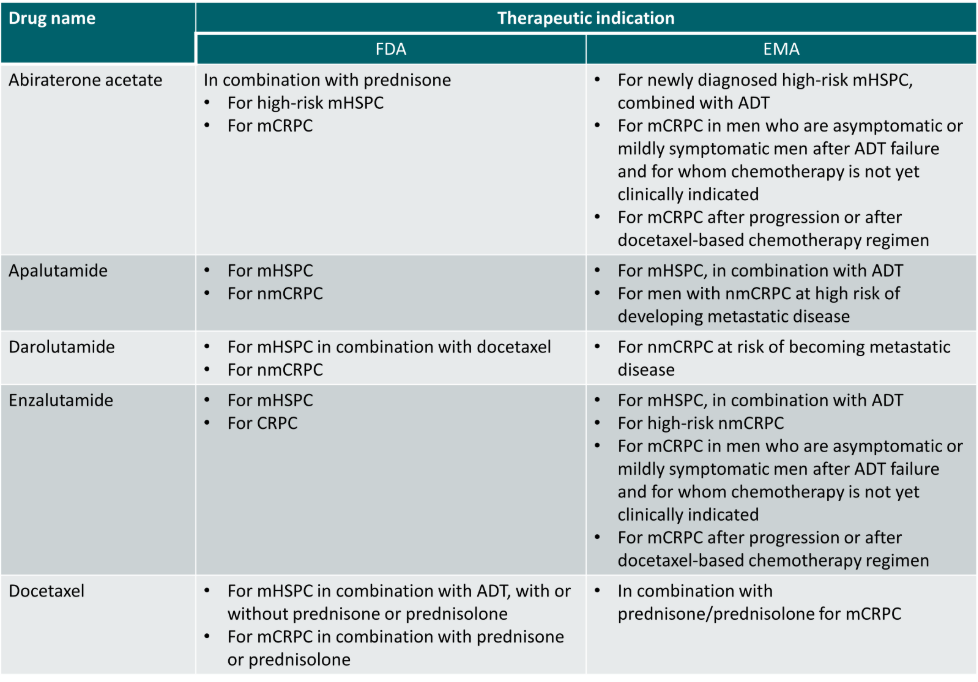
FDA Approvals in the current landscape of mHSPC
2. Metastatic Castration-Resistant Prostate Cancer (mCRPC)
This occurs when the cancer continues to grow despite testosterone being at “castrate” levels (usually < 50 ng/dL). Note: There is an evolving consideration to accept <20 ng/dL as the the optimal target for deep castration.
The Standard Management
Management here is personalised based on prior treatments and genetic markers:
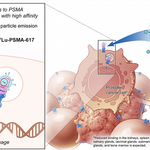
- Radioligand Therapy: Lutetium-177 PSMA-617 is now standard for patients who have progressed after an ARPI and Taxane chemotherapy.
- PARP Inhibitors: (e.g., Olaparib, Talazoparib) – For patients with BRCA1/2 or other DNA-repair gene mutations.
- Immunotherapy: Pembrolizumab is used for the small percentage of patients with high microsatellite instability (MSI-H).
Key Clinical Trials
- VISION: The landmark trial for Lu-PSMA-617, showing it improved survival in heavily pre-treated patients.
- PSMAfore (Recent): Investigated using Lu-PSMA-617 before chemotherapy, showing that it significantly improved radiographic progression-free survival compared to switching to a second ARPI.
- PROfound: Proved the efficacy of Olaparib in men with specific genetic mutations, marking the era of “precision medicine” in urology.
- CONTACT-02 (2025 / 2026 update): Exploring the combination of Cabozantinib and Atezolizumab as a new avenue for patients who have failed prior ARPI therapy.
Summary Table: Current Management Strategy
| Patient Profile | Preferred Strategy | Key Trial Evidence |
| mHSPC (High Volume) | Triple Therapy (ADT + Chemo + ARPI) | PEACE-1, ARASENS |
| mHSPC (Low Volume) | Doublet Therapy (ADT + ARPI) | ARANOTE, ARCHES, TITAN |
| mCRPC (Post-Chemo/ARPI) | Radioligand (Lu-PSMA) | VISION |
| mCRPC (Genomic Mutation) | PARP Inhibitors | PROfound, TALAPRO-2 |
Triplet therapy (ADT + Docetaxel + ARPI) generally offers superior overall survival (OS) compared to doublet therapy (ADT + ARPI or ADT + Docetaxel) in metastatic hormone-sensitive prostate cancer (mHSPC), particularly for high-volume or aggressive disease.
Triplet therapy, such as darolutamide+DOC+ADT or abiraterone+DOC+ADT, reduces the risk of disease progression, while doublet therapy is preferred for lower-volume or frail patients to balance efficacy with lower toxicity.
Summary Decision Matrix (2026 Standards)
| Clinical Factor | Preferred Strategy | Reasoning |
| High Volume + Fit | Triple Therapy | Maximum survival benefit in aggressive disease. |
| High Volume + Frail | Doublet (ADT+ARPI) | Chemo is too toxic; ARPI provides strong control. |
| Low Volume | Doublet (ADT+ARPI) | Chemo (Docetaxel) adds toxicity without proven survival gain here. |
| De Novo (New diagnosis) | Triple Therapy | “Upfront” intensification yields the best long-term outcome. |
| Metachronous (Return) | Doublet (ADT+ARPI) | Often behaves less aggressively than de novo disease. |
Special Considerations
In the Malaysian context, we will often look at the PSMA-PET scan results alongside these criteria. If a patient is “low volume” but has highly active spots on a PSMA scan, they might still consider a more aggressive doublet or even a triplet therapy.
Additionally, for Low Volume (oligo-metastatic) patients, the “doublet” therapy might actually be ADT + Prostate Radiation, as the STAMPEDE trial showed that treating the primary prostate even in metastatic cases improves survival for low-volume patients.
Current Verdict in 2026:
The current verdict in 2026 for managing advanced and metastatic prostate cancer centres on intelligent treatment intensification – using doublet or triplet combination therapies rather than androgen deprivation therapy (ADT) alone – and precision biomarker-driven sequencing.
Urologists and Oncologists will prioritise Triple Therapy for any fit patient with a new diagnosis of metastatic prostate cancer. The 10-year data now clearly show that “saving the best for later” results in worse survival; the most successful strategy is to hit the cancer with the most intensive therapy the patient can tolerate right at the start.
Metastatic Hormone-Sensitive Prostate Cancer (mHSPC)
Combination and Triplet Therapy: ADT monotherapy is no longer enough for most patients. Standard care relies on adding an androgen receptor pathway inhibitor (ARPI) like abiraterone, enzalutamide, or apalutamide to ADT.
Triplet Therapy: For high-volume or de novo (newly diagnosed) metastatic disease, triplet therapy—ADT plus docetaxel chemotherapy and an ARPI—significantly improves overall survival, though it is generally avoided in low-volume or metachronous (recurrent) disease.
Biomarker Integration: Patients with homologous recombination repair (HRR) gene mutations (such as BRCA1/2) may benefit from specialised additions like abiraterone combined with niraparib.
Metastatic Castration-Resistant Prostate Cancer (mCRPC)
Sequencing Therapeutics: Management transitions to a mix of second-line ARPIs, chemotherapy (docetaxel or cabazitaxel), and bone-targeted agents like radium-223.
Radioligand Therapy: 177Lu-PSMA-617 is firmly sequenced for PSMA-positive mCRPC following prior treatments.
PARP Inhibitors: Guidelines prioritise PARP inhibitors (such as olaparib or rucaparib) specifically for patients carrying actionable BRCA or related DNA-repair mutations
Diagnostics and Testing
Genetic Testing: Germline genetic testing is recommended for all advanced/metastatic cases, while somatic tumour testing is standard at the metastatic stage to identify candidates for targeted therapies like PARP inhibitors.
Advanced Imaging: PSMA PET/CT is heavily preferred for precise staging and detecting occult or node-only metastatic progression early
Toward an Era of Adaptive and Personalised Treatment (Investigational)
New treatment approaches promote personalisation to increase patient benefit and decrease the unbalanced burden.