Malaysia is taking strides towards integrating artificial intelligence (AI) into its healthcare system to enhance early disease detection and support clinical decision-making.
In a report by CodeBlue, the Ministry of Health (MOH) has embarked on several pilot projects to assess AI’s role in diagnostics, particularly for conditions like cancer, tuberculosis (TB), and diabetic retinopathy.
According to Health Minister Dzulkefly Ahmad, the Malaysian Health Technology Assessment Section (MaHTAS) is currently evaluating AI-driven diagnostic tools in collaboration with local hospitals and health technology firms. These initiatives aim to address healthcare workforce shortages while improving efficiency and accuracy in medical screenings.
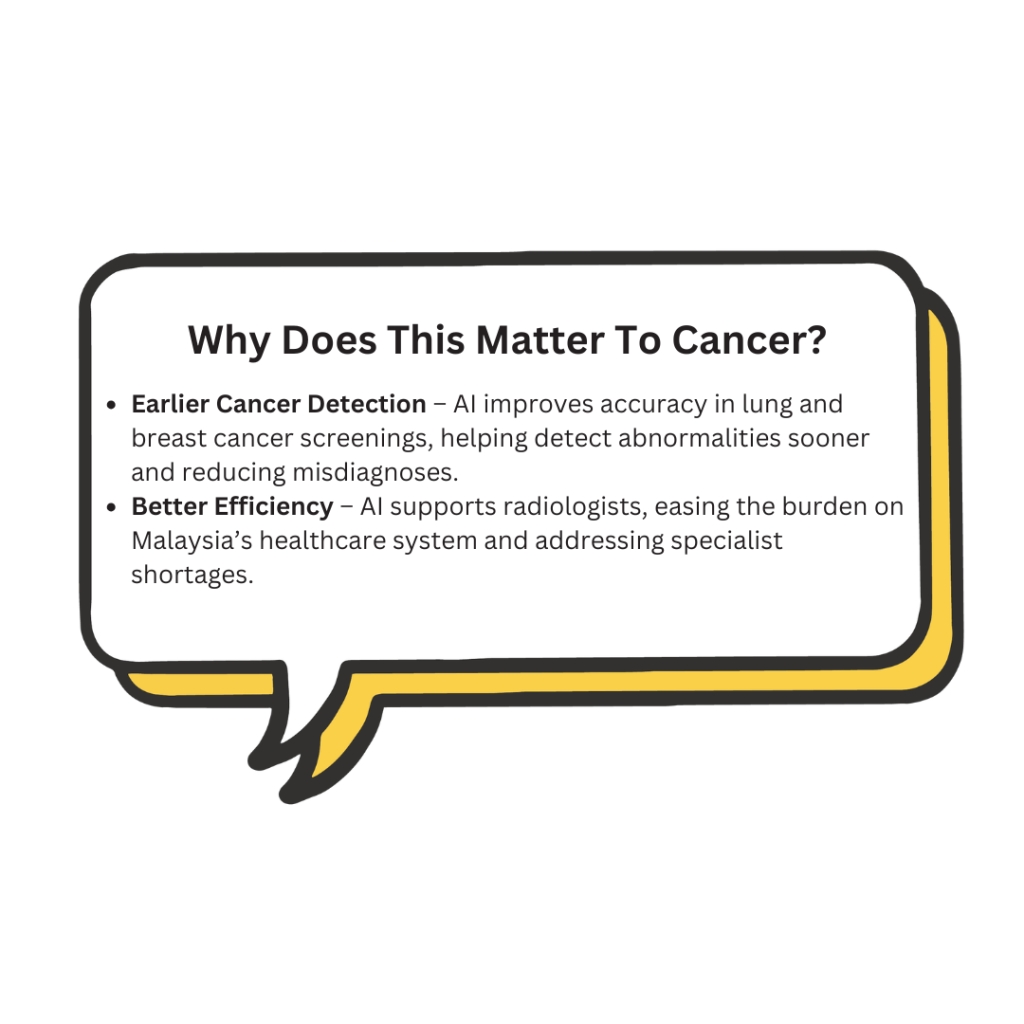
One of the most promising applications is AI-assisted lung cancer screenings. The technology has shown potential in increasing detection accuracy and reducing false positives, especially among less experienced radiologists.
AI serves as an additional layer of review, functioning as a ‘second pair of eyes’ to identify lung nodules at an earlier stage with greater precision. This technology is currently being tested at the National Cancer Institute (IKN), with plans to extend its use to Cyberjaya Hospital, Tengku Permaisuri Norashikin Hospital in Kajang, and Putrajaya Hospital.
In addition, MOH is assessing AI’s effectiveness in breast cancer screenings via mammograms and cervical cancer detection through medical imaging. While initial findings are encouraging, further research is needed to establish AI’s reliability as a supplementary diagnostic tool in these areas.
For tuberculosis detection, AI is being incorporated into chest X-ray screenings and mobile ultrasound applications. The goal is to facilitate early diagnosis and intervention, particularly in communities with limited access to healthcare services.
AI is also being leveraged to tackle diabetic retinopathy, a complication of diabetes that can lead to blindness if undetected. MOH has introduced an AI-powered system known as DR.MATA, designed to improve early detection and ensure timely treatment. By utilizing AI-driven solutions, the ministry aims to enhance accessibility to quality eye care and prevent vision loss among diabetic patients.
Beyond diagnostics, MOH is working with local health technology firms to develop an AI-powered platform called AskCPG. This tool will provide medical professionals with real-time access to clinical practice guidelines (CPG), ensuring standardized treatments and improving adherence to best practices. By offering evidence-based recommendations, the platform seeks to enhance clinical decision-making and minimise inconsistencies in patient care.
While AI presents numerous advantages, Dzulkefly emphasized that its adoption in healthcare must be carefully evaluated. Considerations such as patient safety, regulatory compliance, and ethical implications are critical in determining its suitability. The integration of AI requires a thorough assessment to ensure its effectiveness, alignment with medical standards, and adherence to legal and ethical frameworks.
MOH remains committed to collaborating with experts from technology, academia, and the private sector to ensure that AI development aligns with public health priorities while upholding humanitarian principles and patient safety.
Despite the rapid advancements in AI, the ministry has made it clear that these technologies will complement rather than replace healthcare professionals. AI is intended to serve as a supportive tool, enhancing clinical decision-making without diminishing the essential role of human expertise in patient care.