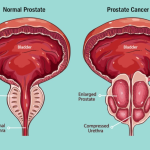
To be considered a specialist in prostate cancer, the treating specialist must possess comprehensive knowledge that extends beyond simply knowing current treatment modalities. They must have a deep understanding of historical landmark trials, including a critical analysis of those studies and their evolution over time, in order to tailor the best treatment approach for an individual patient at that specific juncture.
Prostate cancer is characterized by profound multi-focal and molecular heterogeneity, resulting in highly variable clinical trajectories and treatment responses. Understanding and participating in clinical trials is essential to map this complexity, identify actionable biomarkers, and transition from generalized therapies to targeted, personalized treatment strategies.
The future of prostate cancer therapeutics relies on our ability to decipher its intra-tumoral and inter-patient heterogeneity. Clinical trials serve as the vital bridge translating genomic discoveries into clinical realities, allowing researchers to evaluate combinations of therapies tailored to the diverse and evolving molecular signatures of the disease. Understanding them is essential because they provide patients with early access to cutting-edge therapies and drive the medical advancements that define modern, personalized prostate cancer treatment.
TERMINOLOGIES USED:
The following are terminologies used in prostate cancer and its management:
Advanced / Metastatic Scenarios
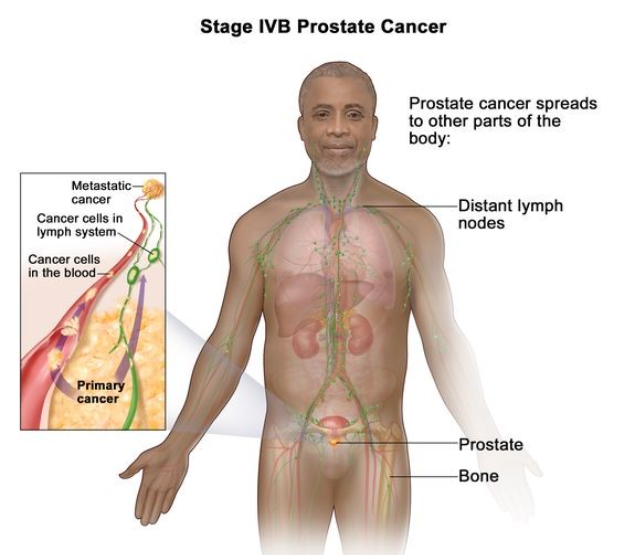
- Metastatic Prostate Cancer: Cancer that has spread from the prostate to distant parts of the body, most commonly the bones or distant lymph nodes.
- Castration-Sensitive Prostate Cancer (CSPC) also called Hormone-sensitive Prostate Cancer (HSPC): Cancer that still responds to treatments designed to lower testosterone levels
- Castration-Resistant Prostate Cancer (CRPC): Cancer that continues to grow or spread even when testosterone is reduced to very low levels.
- mHSPC (Metastatic Hormone-Sensitive Prostate Cancer): Metastatic, but it still responds to hormone therapies designed to lower testosterone levels.
- De Novo mHSPC: The cancer is metastatic at the time it is first diagnosed.
- Metachronous mHSPC: The cancer recurs or spreads after initial localized treatments (like a prostatectomy or radiation)
- mCSPC (Metastatic Castration-Sensitive Prostate Cancer): same meaning as mHSPC
- mHNPC (Metastatic Hormone-Naïve Prostate Cancer): Also same meaning as mHSPC
- nmCRPC (Nonmetastatic Castration-Resistant Prostate Cancer): The cancer has developed resistance to standard hormone therapy, PSA is rising despite very low testosterone levels, but standard imaging scans do not yet show any visible tumors or spread in distant parts of the body.
- mCRPC (Metastatic Castration-Resistant Prostate Cancer): This is the most advanced stage of prostate cancer. The cancer has spread to other organs or bones, and it continues to grow and progress even though hormone therapy has reduced testosterone to minimum levels.
- Biochemical Recurrence: A scenario where PSA levels rise after an initial curative treatment (like surgery or radiation), suggesting the cancer has returned.
Treatment Terminology
- ADT (Androgen-Deprivation Therapy), also known simply as Hormonal therapy in prostate cancer: The cornerstone of prostate cancer treatment; therapies designed to block or reduce the production and function of androgens (like testosterone) on which prostate cancer cells thrive.
- Brachytherapy: A form of radiation therapy where small radioactive “seeds” are implanted directly into the prostate gland.
- External-Beam Radiation Therapy (EBRT): A treatment that directs high-energy radiation at the prostate from a machine outside the body.
- Chemotherapy: The use of anti-cancer drugs to destroy cancer cells, often used in advanced or metastatic stages.
- Adjuvant Therapy: Additional treatment (such as radiation or hormone therapy) given after surgery to kill any remaining cancer cells and lower the risk of recurrence
- Neoadjuvant Therapy: A type of treatment (such as hormone therapy or chemotherapy) given before the primary treatment (usually surgery or radiation therapy). To shrink the tumor, make it easier to remove, and eliminate microscopic cancer cells that may have already broken away from the main tumor.
- Neoadjuvant Hormone Therapy (NHT): ADT treatment given for a few months before a patient undergoes a radical prostatectomy or radiation to improve local control.
- ARPI (Androgen Receptor Pathway Inhibitor): A class of highly potent, next-generation hormone therapies that block the activity of male hormones (androgens) much more aggressively than older, traditional hormone treatments. Instead of just lowering testosterone production, ARPIs directly block the androgen receptors on prostate cancer cells and prevent them from using even trace amounts of testosterone to grow. Commonly prescribed ARPIs include enzalutamide, apalutamide, darolutamide, and abiraterone acetate.
Disease Extent & Burden Terminologies
Used primarily in mHSPC to describe how aggressively or widely the cancer has spread within the body.
- Oligometastatic Disease: A scenario where the cancer has spread to a limited number of distant sites (generally defined as 5 or fewer metastases), often considered for aggressive, targeted local therapies. It is an intermediate state of stage IV prostate cancer where the disease has spread from the prostate to a limited number of distant sites (usually 1 to 5).
- Polymetastatic Disease: Also known as High-Volume Disease. The cancer has widely spread into multiple organs, viscera, or numerous bone lesions (e.g., four or more bone metastases with at least one beyond the spine and pelvis).
Testing, Diagnostic, & Biomarker Terminologies
Critical for monitoring treatment efficacy, assessing resistance, and predicting outcomes.
- Nadir: The lowest point or level that a patient’s PSA drops to during treatment, which serves as a baseline for measuring future cancer progression.
- Castration Levels of Testosterone: The target testosterone level for ADT (<20ng /dl; formerly categorized as < 50ng / dl)
- Biochemical Progression / Recurrence: A rising PSA level that occurs without the presence of visually detectable tumors on an imaging scan.
- Radiographic Progression: The worsening or spread of cancer confirmed by imaging (such as a CT, MRI, or PET scan), defined formally by the Prostate Cancer Working Group as the appearance of new bone or soft-tissue lesion
Summary Comparison
| Acronym | Has it Spread? (Metastatic) | Does it Respond to Basic Hormone Therapy? |
| mHSPC / mCSPC | Yes | Yes |
| nmCRPC | No (not visible on standard scans) | No (PSA is rising) |
| mCRPC | Yes | No |
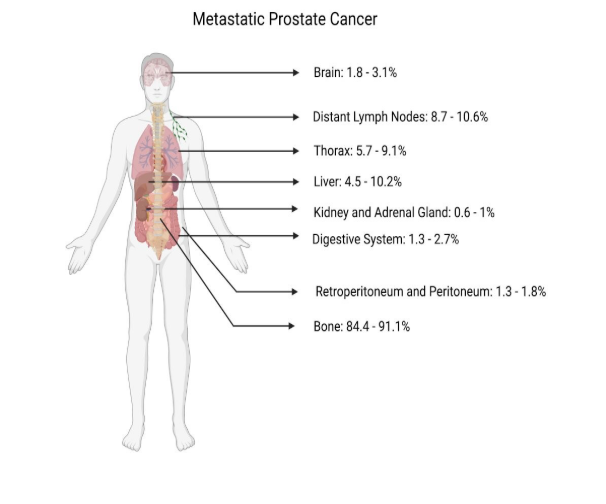
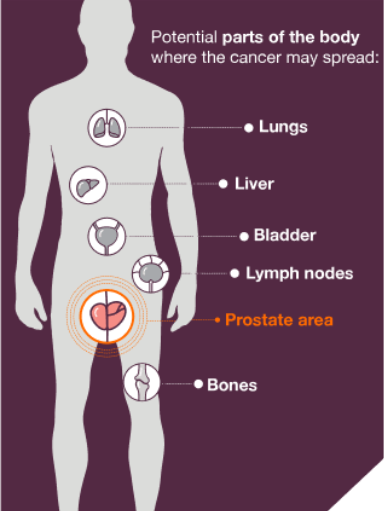
Metastatic prostate cancer spread:
Bones: Occurs in up to 85% to 90% of cases, typically affecting the axial skeleton (spine, pelvis, and ribs).
Lymph Nodes: Frequently the first area outside of the prostate to be affected, including the pelvic and distant lymph nodes.
Visceral Sites (Less Common)
Lungs: The second most common organ involved, though it usually happens after bone or lymph node spread.
Liver: Less common and often indicates a more advanced, systemic stage of the disease
Rare Sites
In advanced stages, the cancer can spread to the brain, adrenal glands, kidneys, or pancreas, though this is relatively uncommon
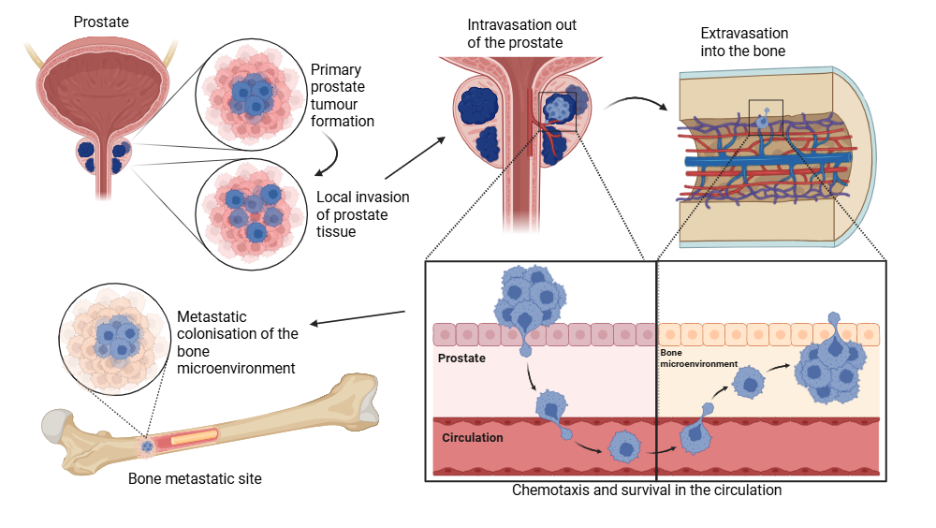
Bone spread
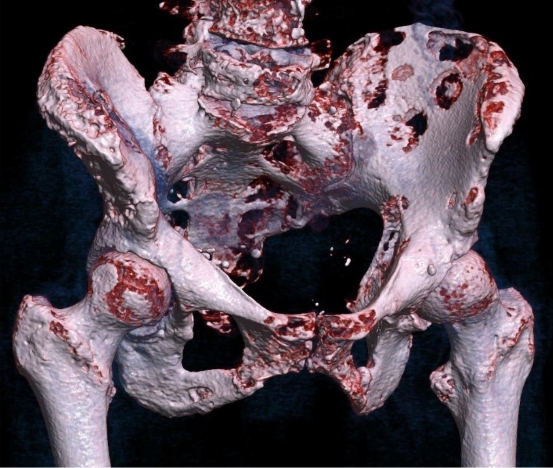
Bone spread to the pelvis and hips (common)
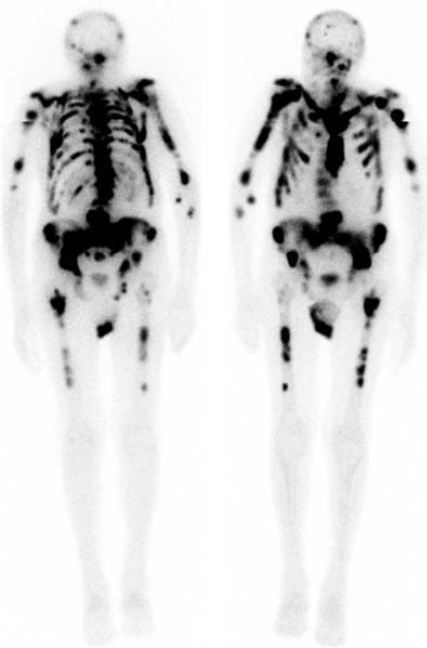
Widespread bone metastasis on radionuclear bone scan (common in later stages)
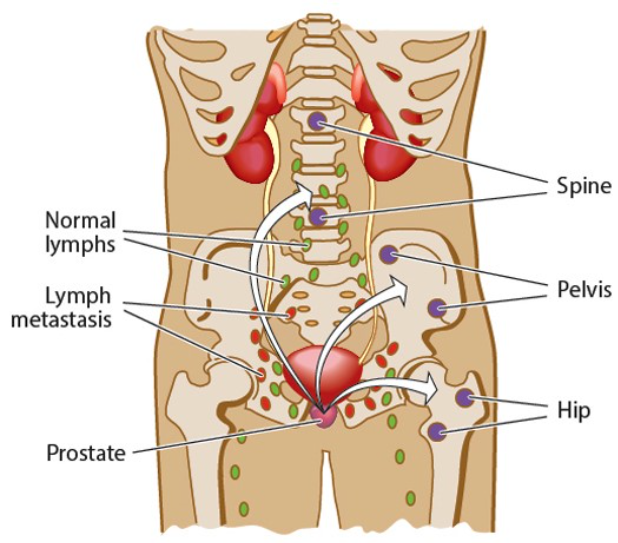
Regional lymph node spread
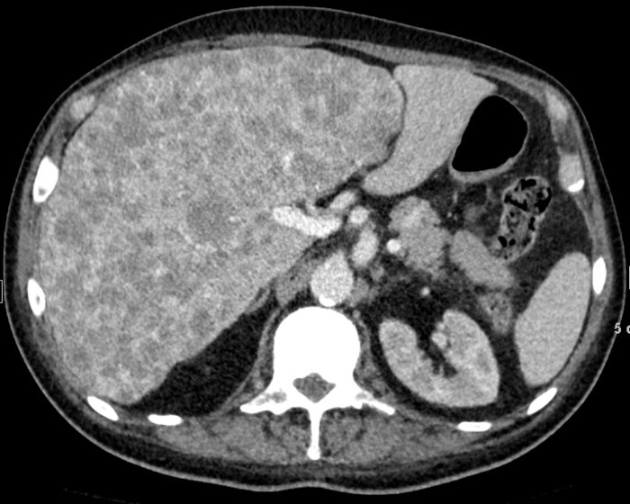
Liver metastasis (uncommon) in prostate cancer
UNDERSTANDING CLINICAL TRIALS
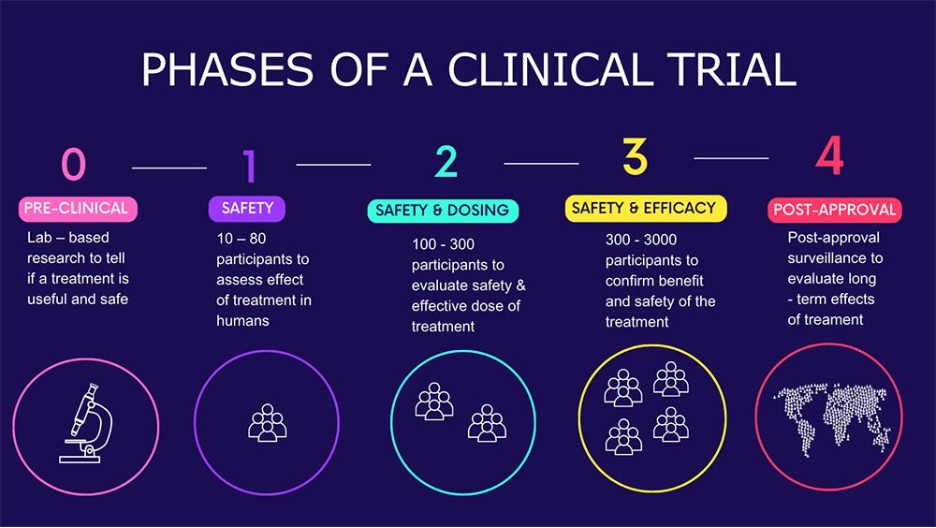
Clinical trials are foundational research studies involving human volunteers designed to evaluate the safety, efficacy, and potential applications of new medical treatments, devices, or diagnostic procedures. By strictly testing hypotheses through progressive phases, they transform experimental concepts into standard, life-saving therapies while strictly prioritizing patient well-being and informed consent.
Understanding these studies – whether you are looking at how a trial functions as a patient, researcher, or advocate – requires grasping the core mechanics that ensure medical integrity. Essential components of this process include:
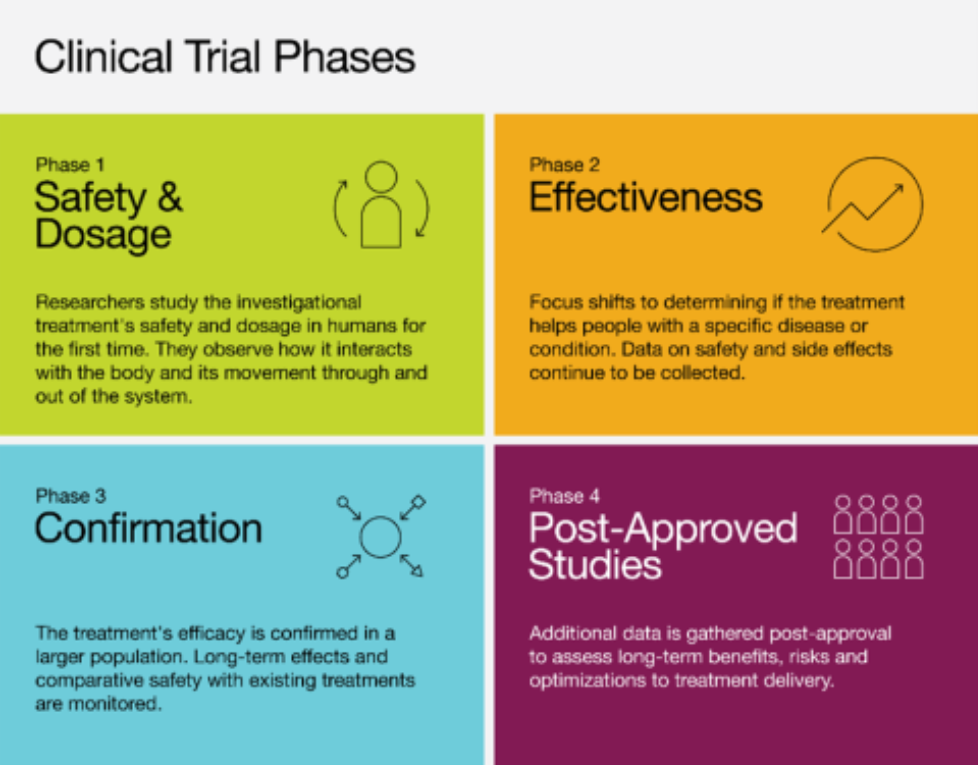
- Phases: The structured stages (Phase I through IV) that rigorously test treatments for safety, dosage, and long-term effects.
- Randomization & Blinding: Randomization and blinding are methodologies used by clinical researchers to eliminate bias and compare experimental drugs against a standard or placebo.
- Informed Consent: The cornerstone ethical process where participants are fully educated on expectations, risks, and benefits before deciding to enroll.
THE HIERARCHY OF EVIDENCE AND THE PRIMACY OF RANDOMIZED TRIALS
At the core of evidence-based medicine lies a hierarchy. Expert opinion and case series sit at the bottom. Large, multicenter, randomized controlled trials (RCTs) sit at the top. The reason is straightforward: randomization is the only reliable method to control for both known and unknown confounding variables. When the ProtecT trial randomized men with localized prostate cancer to active monitoring, surgery, or radiotherapy, it ensured that differences in outcome could be attributed to the treatment rather than to baseline differences in health, tumor biology, or socioeconomic status.
Decision-making in 2026 leans heavily on RCT data precisely because prostate cancer is a disease of extraordinary heterogeneity. A man with low-volume Gleason 3+3 disease has a fundamentally different condition from a man with high-volume Gleason 4+5 disease. Without randomization, comparisons between treatments are hopelessly confounded by this heterogeneity. Landmark trials give clinicians confidence that an observed benefit – whether in overall survival, metastasis-free survival, or quality of life – is real and reproducible.
From Efficacy to Effectiveness: The Generalizability Question
A landmark trial establishes efficacy: does an intervention work under ideal, controlled conditions? Clinical decision-making requires effectiveness: does it work in the real world, across diverse settings and populations?
The low-dose abiraterone trial illustrates this tension. A rigorous Phase III trial suggested comparable PSA progression-free and overall survival between low-dose and standard-dose abiraterone, but was underpowered to prove statistical non-inferiority. In resource-rich settings, clinicians may await stronger evidence. In settings where the cost of standard-dose abiraterone equals a month’s income, the same trial provides a reasonable basis for shared decision-making. The evidence does not change; the context in which it is applied does.
Similarly, the ARTO trial demonstrated an overall survival benefit for SBRT in oligometastatic castration-resistant prostate cancer. But it was a Phase II trial with 157 patients. Clinicians must decide whether this Phase II evidence is sufficient to change practice, or whether they should await Phase III confirmation. This judgment call – weighing the strength of evidence against the urgency of the clinical scenario – is where the art of medicine meets the science of clinical trials.
The Principle of Clinical Equipoise
Landmark trials are ethical only when there is genuine uncertainty about which treatment arm is superior – a state known as clinical equipoise.
The DISSECTION 2.0 trial, randomizing men with negative PSMA PET scans to prostatectomy with or without extended lymph node dissection, exists because we genuinely do not know whether the morbidity of lymphadenectomy is justified by an oncologic benefit in this imaging-staged population.
For the clinician, recognizing equipoise is essential. When a patient falls squarely within the eligibility criteria of a landmark trial, treatment decisions can be guided directly by the trial’s conclusions. When a patient falls outside those criteria – perhaps older, with different comorbidity profiles, or with disease features excluded from the trial – the clinician must extrapolate. The further the patient from the trial population, the less directly the evidence applies, and the more clinical judgment must fill the gap.
Surrogate Endpoints and Their Limitations
Many landmark trials use surrogate endpoints – PSA progression, metastasis-free survival, radiographic progression-free survival – rather than overall survival. This is practical; overall survival trials require years of follow-up, and effective therapies exist at progression that can confound survival analyses.
However, surrogate endpoints are not interchangeable with the outcomes patients care about most. The large 2026 retrospective analysis showing radiographic progression without PSA rise in patients on enzalutamide is a cautionary tale. A trial relying on PSA progression as its primary endpoint would have missed clinically meaningful disease progression. Decision-making in 2026 therefore requires understanding not just what a trial showed, but how it measured success, and whether those measurements capture what matters to the patient in front of us.
Negative Trials and the Null Hypothesis
Not all landmark trials are positive. Negative trials – those that fail to reject the null hypothesis – are equally important for decision-making. They protect patients from ineffective or unnecessarily toxic therapies. The phase III trial comparing low-dose to standard-dose abiraterone, while underpowered, did not suggest inferiority. This absence of a signal of harm, combined with a plausible pharmacokinetic rationale, is clinically actionable in specific contexts. A negative trial that is adequately powered, by contrast, should close the door on a treatment approach. The discipline to accept negative evidence is as critical as the enthusiasm to adopt positive findings.
The Meta-Analytic Framework
Individual landmark trials exist within a broader ecosystem. The EAU Guidelines, ASTRO/AUA amendments, and PCWG4 recommendations do not simply list trials; they synthesize them. Meta-analyses and systematic reviews pool data across trials to produce more precise estimates of treatment effects, often revealing benefits or harms that individual studies were underpowered to detect.
The triplet therapy recommendation in metastatic hormone-sensitive prostate cancer is not based on any single trial but on a consistent pattern across ARASENS, PEACE-1, and other studies. Decision-making in 2026 is increasingly informed by this meta-analytic perspective, which weighs the totality of evidence rather than cherry-picking individual trials.
Shared Decision-Making: The Final Common Pathway
Ultimately, landmark trials provide the evidence base, but the treatment decision belongs to the patient.
The PRESIDENT trial asks whether radical prostatectomy improves deterioration-free survival in oligometastatic disease. The trial is grounded in a patient-centered primary endpoint that explicitly incorporates quality of life. When results are available, they will inform conversations between surgeons and patients – conversations that must translate hazard ratios and p-values into language that addresses a man’s fears, priorities, and goals.
The Voro Urologic Scaffold in the ARID II trial addresses a deeply personal outcome: urinary continence. A trial demonstrating that a surgical adjunct dramatically improves the chance of being pad-free at six weeks may, for some men, be more influential in their decision-making than a trial showing a modest survival advantage from treatment intensification. The hierarchy of evidence does not dictate the hierarchy of patient values.
Conclusion
Landmark clinical trials form the basis of decision-making in prostate cancer by providing reliable, reproducible evidence about what works, for whom, and at what cost – whether measured in toxicity, quality of life, or ringgits.
They establish equipoise, define endpoints, generate guidelines, and, when synthesized across the literature, paint a picture of optimal care that is greater than the sum of its parts. The clinician’s task is to interpret that evidence in the context of the individual patient, applying the general to the specific with wisdom, humility, and respect for the values of the man seeking guidance.
Ultimately, clinical trials transform emerging research into new standards of care. By comprehending how these trials operate, patients and their healthcare teams can make highly informed, empowered decisions regarding their treatment pathways.