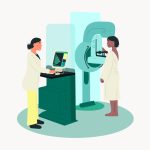
What, when, where and why are the often asked questions of a patient when asked to do a mammogram. In this article, the above questions will be directed on mammogram.
Firstly, the meaning of a mammogram.
This article was written after an interview with Ms. Fazlinda binti Taher, the Diagnostic Radiographer of Hospital Melaka. She has been working at the Radiology Department since 2003.
Why or When Does a Doctor Order a Mammogram?
A doctor may order a mammogram because a patient has:
a) A strong family history of breast cancer
b) Lump in the breast, early felt
c) Discharge from nipples
d) Colour, size or shape changes
However, there is slowly an increase in the number of persons who realise the importance of Pap smear and mammogram and go to private centres to do it. Those who cannot afford may approach LPPKN to get a free voucher.
The mammogram machine used is called Siemens Mammomat Revelation. In Hospital Melaka, each weekday about 12 patients are seen by appointment. Patients referred by the breast clinic are also seen, making approximately 14 patients per day.
What is the Purpose of a Mammogram?
A mammogram is the examination of the breast using radiation. This helps to determine if the breast tissue shows abnormalities that indicate early cancer. The examination uses a low dosage of radiation, making the process safe.
A mammogram is able to detect even very tiny lumps which cannot be felt during clinical breast examination.
How is a Mammogram Done?
The patient is placed in front of the mammogram machine. The right or left breast is placed on top of the detector plate. The breast is then compressed using the plate. Maximum pressure is applied to obtain the clearest results.
In the Radiology Department of Hospital Melaka, the examination is a tomosynthesis which takes about 25 seconds with 25 slices. So it is fast and any discomfort is minimal.
Patients under the age of 40 years usually undergo ultrasound instead. However, in certain cases where a lump is felt early or when there are colour or shape changes, the doctor may advise the patient to undergo a mammogram.
When is it Best Not to Do a Mammogram?
a) One week before or during a period
b) Inform staff if pregnant
c) Breastfeeding a child
Those above 40 years should do a mammogram yearly or once every two years, or as advised by doctors. The reason this group should do a mammogram is because cancer can be detected in the early stages even without patients having symptoms.
Those with symptoms, BRCA1 and BRCA2 history, or family history are encouraged to undergo screening.
Why Are Patients Reluctant to Keep Their Appointments?
Many patients are reluctant to keep their appointments because:
– Frightened of pain
– Worried and scared of the mammogram results
– Wrongly informed about mammogram
– Fear about radiation and the end result
– Known to cause rumours and misinformation
Some patients do not keep their appointments due to false information given by those close to them — relatives, neighbours or colleagues.
Do’s and Don’ts About Mammogram
Do’s
– Come at your appointment time, not early or late.
– Wear simple skirt or pants with a blouse that has an opening in front.
– Inform the staff if you have an implant.
– Be calm and follow instructions.
– Bring previous mammogram results if available.
Don’ts
– Do not use deodorant, lotion or powder on the day of procedure.
– Cancel appointment if breast is painful (first day of period).
– Do not hesitate to inform staff if you have any problems during the procedure.
Challenges Faced by Staff on Appointment Day
Some of the biggest problems or setbacks faced by staff include:
– Late arrival
– Not informing staff if facing discomfort
– Coming too early and having to wait a long time
– Not coming or not keeping appointments
– Wearing unsuitable clothing
– Not informing staff if unable to attend the appointment
Encouraging More Women to Go for Mammogram
How can more women be encouraged to think of mammogram as a routine examination to be performed regularly?
Many assume it is invasive or believe it will result in breast cancer. Some do not believe in the effectiveness of the procedure. Others are influenced by personal or religious beliefs, fear, and uncertainty about the outcome.
The best solution could be creating awareness through newspapers, TV, radio, Facebook, Instagram and public talks which already exist. Seniors, youth and young adults can work together to create new ideas to increase participation in mammogram screening.
Anyone reading this article may have an idea or method that has worked. Please share with us, especially if we can promote participation in rural or remote areas such as Sabah and Sarawak. This information may benefit those with little education or those without easy access to mammogram facilities.
My last words are:
“Have you done your mammogram? If not, please go and do yours.”