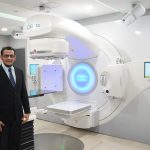
It is 2026, and I find myself reflecting on the kind of cancer stories that I will be choosing to amplify. Like many of my colleagues, I am naturally drawn to progress. We celebrate the “breakthrough” science, the “game-changing” blood tests, and the AI platforms that promise to finally “turn the tide” on this disease. And honestly, we should. Innovation has saved lives and will continue to be a vital part of our arsenal.
However, a recent reflection by Richard Sullivan, a global cancer policy expert, stopped me in my tracks. He observed that while technological innovation and health system strengthening should go hand-in-hand, it is increasingly beginning to feel like a zero-sum game. The problem is not the science itself, but rather the unrelenting “hype” that surrounds it. This hype is increasingly drowning out the context and the everyday systemic challenges that actually determine whether a person survives cancer.
The great divide
I see this contrast most clearly when attending oncology conferences. Inside the venue, everything feels possible. The slides are polished, the language is uplifting, and the atmosphere is energised by a sense of inevitability. We speak of precision medicine and multi-cancer early detection tests with the confidence that these tools will soon reach every patient.
Then you step outside, and reality hits.
Outside the conference hall, the lived experience of patients and health services looks very different. Many families are struggling just to get a basic diagnosis. Clinics are overburdened, and pathology turnaround times are so stretched that treatment starts are delayed for weeks. While we discuss “innovation” on stage, families are quietly selling their assets or taking out high-interest loans just to stay afloat, a phenomenon we often call “financial toxicity” but which feels more like a catastrophe to those living it.
For many, the hurdle is not a lack of advanced technology. It is the inability to afford transport to the clinic, childcare while they receive treatment, or the time off work for repeated visits. In a fragmented system, patients are often lost between referral points because the simple support they need to navigate the maze of care just is not there.
Hope vs. Hype
This does not mean we should abandon innovation. It means we must stop treating the health system as a footnote and the technology as the only solution. We need to distinguish between hope and hype.
Hope is grounded; it makes space for uncertainty and asks the difficult question: What will it take for this to truly help a patient? Hype, on the other hand, collapses nuance. It takes early, non-peer-reviewed findings and frames them as “transformative” before their real-world feasibility has been tested. When we let hype lead the narrative, we sideline essential conversations about costs, potential harms, and whether our systems can even handle the new workload.
Choosing to be a “professional skeptic” is not about being cynical. It is about being responsible. If we care about patients, we have to care about what happens after the headline.
Implementation is the intervention
A test can be technologically impressive and still be clinically uncertain. For example, new screening strategies sound wonderful. I mean who would not want to find cancer earlier? But if a test is only available to a privileged few, or if it diverts resources away from basic diagnostic capacity and symptom awareness, it may actually widen the gap between the “haves” and “have-nots.”
In many settings, these questions are urgent. If a new test comes back positive, who will counsel the patient? Who will arrange the biopsy and the specialist follow-up? If the system is not ready to absorb these downstream needs, the technology is not a breakthrough. But rather, it is a burden!
We often act as if the health system will naturally “catch up” to the technology. But in practice, implementation is not an afterthought. It is the intervention. A discovery that cannot be delivered consistently, safely and affordably will not reduce cancer deaths. In fact, it might increase harm through overdiagnosis or the eventual loss of public trust when the promised “miracles” fail to materialise.
A shift for 2026
As we move forward, we need to change how we define progress.
- Focus on benefit, Not novelty: We should stop assuming “new” is always “better.”
- Raise the bar for communication: Organisations and journals must challenge exaggerated claims before they become accepted as truth.
- Make delivery the standard: Every presentation on a new “breakthrough” should have to explain the pathway: who delivers it, what it replaces, what it costs and who follows up?
- Strengthen the foundation: Workforce capacity, pathology access, and financial protection are not “supportive” issues. They are the bedrock of cancer control.
Cancer outcomes are not determined in conference halls. They are determined in the “daily grind” of clinics, labs, pharmacies and homes. We can celebrate innovation while still demanding honesty. If 2026 is the year we prioritise the systems that deliver care, we might finally protect what matters most in cancer: our patients’ lives and their dignity.